Kenya’s farms are capable of so much more than they currently produce. The average maize farmer harvests around 1.7 tonnes per hectare — yet the same land, properly managed, can produce four to six times that amount.
That gap isn’t down to bad farmers. It’s down to a combination of tired soils, unreliable rain, and inputs that aren’t quite right for the conditions. The good news is that each of these problems has a practical solution, and Kenyan farmers and agronomists are already putting many of them to work.
This article walks through what those solutions look like – from soil health to smart irrigation to precision technology – and what makes sense depending on where in the country you’re farming. The article is written by NuaSense. We design and deploy precision sensor systems that turn soil, water, and air data into actionable intelligence — helping operations run smarter, not harder.
Why crop yields in Kenya are low — And what farmers can do about It
It usually starts with the soil
Before blaming the weather or the seed, check the soil. Across Kenya’s medium and high-rainfall areas, 63% of soils are acidic, 80% are phosphorus-deficient, and 75% are low in organic carbon. That means the majority of Kenyan fields have a chemistry problem – and applying fertiliser on top of a chemistry problem is largely a waste of money.
When soil pH drops below 5.5, nutrients like phosphorus, calcium, and magnesium become chemically locked up. A farmer can apply two bags of fertiliser and see almost no response – not because the fertiliser is wrong, but because the soil can’t deliver it to the plant. The fix is lime. Kenya’s own Soil Acidity and Liming Handbook — produced by the Ministry of Agriculture, KALRO, and IFDC — documents yield increases of up to 500% on properly limed soils. At around KES 6,000 per acre for a five-year correction, it’s one of the best-value investments available.
Beyond acidity, soils across Kenya are losing roughly 26 tonnes of topsoil per hectare every year through erosion. Years of burning crop residues instead of returning them to the soil, combined with deep tillage that breaks up structure, have left many fields biologically dead. Rebuilding that takes time — but it starts with simple decisions like stopping the burning, leaving maize stalks on the field after harvest, and adding whatever organic matter is available.

On the biological side, Coastal Biotech is developing biostimulant and biofertiliser products specifically for East African soils. These work alongside mineral fertilisers to improve how efficiently plants take up nutrients — particularly useful in soils where the microbial life that drives nutrient cycling has been depleted.
Water is the second big constraint
Kenya has the irrigation infrastructure to water 1.3 million hectares, but currently less than 12% of that potential is being used. Almost everything else runs on rain — and rain is getting less predictable. The 2022 drought was Kenya’s worst in forty years. Even in wetter years, a two or three-week dry spell at flowering can cut a maize crop’s yield in half.
Farmers who manage water intentionally – whether through proper irrigation, water harvesting, or simply timing their planting to match the soil moisture window – consistently outperform those who don’t.
Practical farming techniques to increase crop yields in Kenya
Push-pull intercropping – one of the smartest systems going
If there’s one technique every maize farmer in Kenya should know about, it’s push-pull. Developed over two decades by icipe and Rothamsted Research in the UK, it works by intercropping maize with desmodium – a legume that repels stem borers and fall armyworm through its root and leaf chemistry – and planting Napier grass or Brachiaria around the border of the field to trap those same pests before they reach the crop.
The results speak for themselves. 75% of farmers who adopt push-pull report tripling or quadrupling their maize yield – moving from around 1.5 tonnes per hectare to 4 or more. Fall armyworm populations drop by over 80%. Striga – the parasitic weed that can destroy an entire crop – is suppressed almost completely by the desmodium’s root chemistry. And because desmodium is a legume, it also fixes nitrogen into the soil, improving fertility for the following season.
Choose the right seed for where you farm
Seed selection is one of the most important decisions a farmer makes, and it’s often treated as an afterthought. Planting an open-pollinated local variety in a drought-prone area, when improved drought-tolerant hybrids are available, means starting the season already at a major disadvantage.
CIMMYT’s DroughtTEGO® varieties average 4.5 tonnes per hectare under dry conditions – against 1.8 tonnes for unimproved local varieties under the same stress. That’s not a marginal difference. For farmers in the transitional and semi-arid zones, choosing the right variety is the single biggest yield lever available.
MLN-tolerant hybrids are equally non-negotiable across the Rift Valley, western, and central regions. Maize Lethal Necrosis caused an estimated 22% loss in national maize production in 2013 after first appearing in Bomet County in 2011. Today, nineteen MLN-tolerant hybrids are available through certified agrodealers — and using them is simply a matter of asking for the right thing when buying seed.
Get fertiliser timing and placement right
Fertiliser is the biggest cash expenditure for most farmers, and it’s frequently applied in ways that reduce its effectiveness. The four Rs of fertiliser management – right source, right rate, right time, right place – are simple in principle but make a significant difference in practice.

The most common mistakes are applying nitrogen too early (before the crop has enough leaves to use it), applying phosphorus to soils that are still too acidic for it to be available, and applying the same rate everywhere regardless of how the soil varies across a field. Site-specific fertiliser recommendations based on soil tests consistently outperform blanket rates by 15–30% in KALRO trials.
Proteen offers fertiliser products formulated for East African soils – including slow-release options that stay available through the crop cycle rather than leaching out with the first heavy rain. For farms managing larger areas across variable soil types, this kind of product design makes a real practical difference to how much of each bag of fertiliser actually reaches the crop.
Water harvesting – low-tech solutions that really work
Not every farm needs a borehole or an irrigation scheme. Some of the most effective water management in Kenya’s drier areas relies on simple structures built with local materials and labour.
Sand dams, built across seasonal riverbeds, store water in the sand rather than in open pools – which means almost no evaporation loss. Kitui County has around 1,500 of them, and they’ve transformed farming calendars in areas that previously had no water access between the rains. Communities that build a sand dam gain access to water within walking distance for most of the year.
Zai pits are another tool that works remarkably well in dryland areas. These are small planting pits dug in a grid pattern across the field – each one acts as a mini-catchment, concentrating rainfall around the root zone and holding it there. Combined with a handful of compost per pit, they’ve delivered yield improvements of over 100% in areas receiving just 300–800mm of rainfall a year. The investment is time and effort, not cash.
Drip irrigation for higher-value crops
For farmers growing tomatoes, French beans, capsicum, or other high-value crops, drip irrigation changes the economics entirely. It delivers water directly to the root zone, cuts water use by 50–70% compared to flood or furrow irrigation, and keeps foliage dry – which dramatically reduces fungal disease pressure. On a well-managed drip-irrigated tomato crop, you can get close to the actual yield potential of the variety. On an open-field, flood-irrigated one, you’re leaving a lot on the table.
Technologies and innovations that are boosting crop yields in Kenya
Knowing what’s happening in your soil in real time
The biggest shift in farm management over the past decade hasn’t been a new chemical or a new variety – it’s been the ability to actually measure what’s happening in the soil and the air, continuously, without having to dig up samples or wait for a lab result.
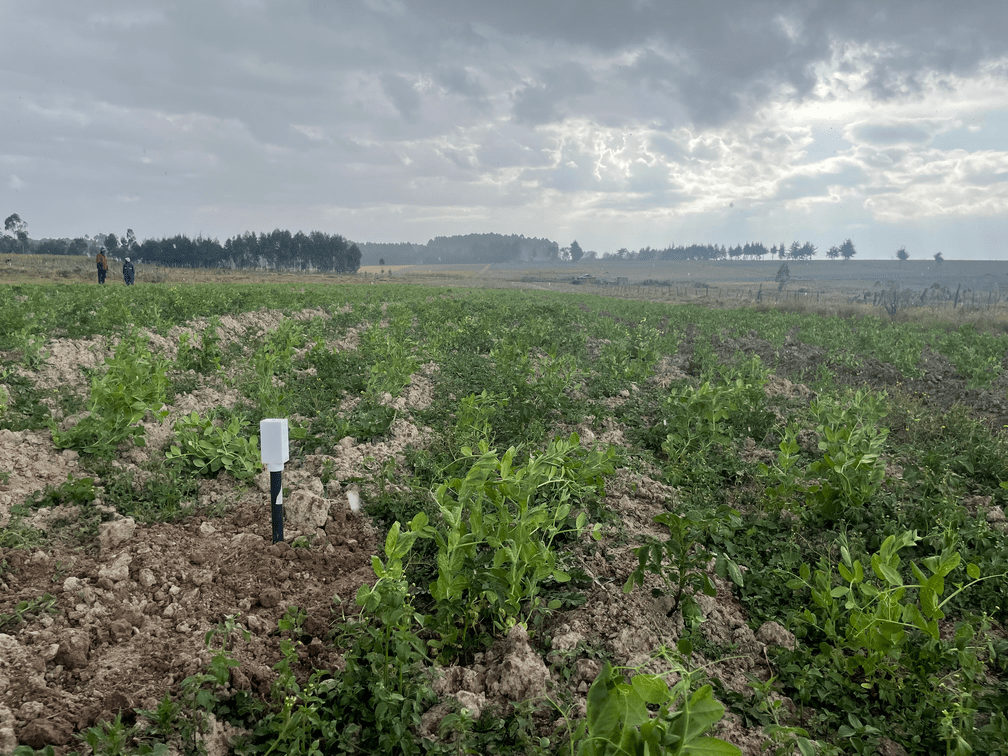
NuaSense designs and deploys sensor systems that monitor soil moisture, temperature, salinity, and atmospheric conditions in real time, turning that data into clear recommendations – when to irrigate, when nutrients are being leached, when conditions favour disease. For operations where getting the timing right is the difference between a profitable crop and a failed one, this kind of continuous monitoring removes the guesswork from some of the most consequential decisions on the farm.
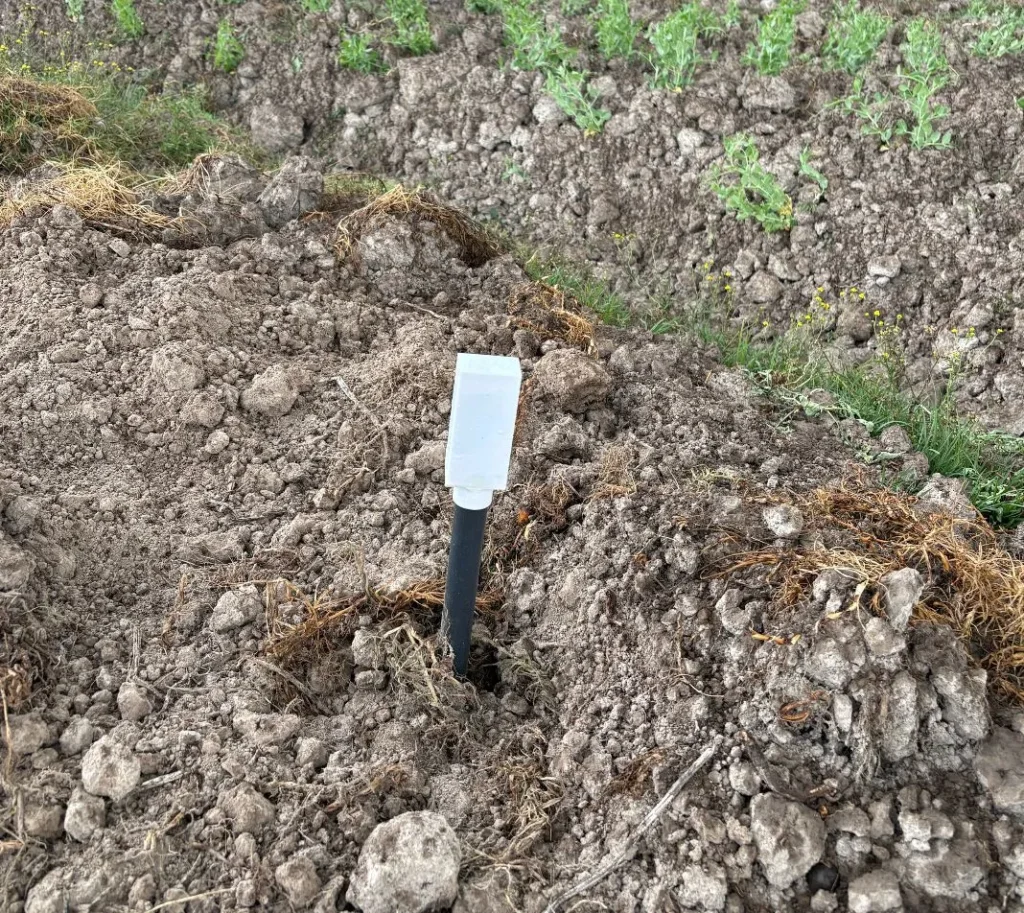
The principle is simple: you can’t manage what you can’t measure. Knowing that your soil moisture dropped below the critical threshold at 20cm depth yesterday – before the crop showed any visible stress – means you can irrigate today rather than watching leaves curl tomorrow.
Solar-powered irrigation
SunCulture solar irrigation systems have consistently shown yield improvements of up to 5× on farms in ASAL and transitional zones compared to rainfed plots. The key advantage is reliability – a solar pump doesn’t depend on fuel availability or grid power, and it runs through the day on free energy. For farms that have a borehole, a river, or a water pan nearby, solar pumping makes that water source usable without the running cost that kills the economics of diesel-powered systems.
In Zone IV especially – where a two or three-week dry spell at flowering regularly costs farmers half their crop – the ability to deliver supplemental irrigation at exactly the right moment makes the difference between a salvaged harvest and a total loss.
Greenhouse farming – taking the weather out of the equation
A well-managed greenhouse yields 3–5 times more than open-field production of the same crop, while using 50% less water. For high-value crops like tomatoes, capsicum, and cucumbers, it also takes the weather completely out of the risk equation — no hailstorm, no unexpected dry spell, no disease outbreak driven by an unusual wet period can wipe out a greenhouse crop the way it can an open field.
A standard 8m × 30m greenhouse can produce 8–12 tonnes of tomatoes per cycle. For farm managers who’ve done the numbers and have access to a reliable market, the payback on greenhouse investment typically comes within two to three growing cycles.
Drones for monitoring and spraying
Drone technology is increasingly practical for Kenyan commercial farms. Multispectral imaging can identify crop stress – from water deficit, nutrient deficiency, or early disease – before it’s visible to the eye on the ground, giving agronomists a head start on intervention. Precision spray drones apply pesticides at a fraction of the volume of conventional sprayers, with better canopy penetration and less drift. For large-scale operations, the time saved and input cost reduction add up quickly.
How to increase crop yields in Kenya based on your region
Kenya’s agro-ecological diversity means what works in Nyandarua won’t necessarily work in Makueni. Here’s what matters most, zone by zone.
The humid highlands – Zones I and II
The highlands of Central Kenya, the Aberdares, and the Mount Kenya slopes are some of the most productive land in the country – but soil acidity is severe, often sitting at pH 4.5 to 5.0 in areas like Nyandarua. Liming is the single most important intervention here, and it should come before any investment in improved seed or additional fertiliser. Without correcting the pH, neither will perform.
Potato late blight is the biggest yield threat in this zone, and it starts with using certified clean seed rather than farmer-saved tubers. A continuous in-field weather sensor telling you exactly when humidity and temperature are creating blight-favourable conditions lets you spray at the right moment rather than on a fixed calendar — which typically means fewer applications and better protection.
The semi-humid midlands – Zone III
This is Kenya’s agricultural heartland – Kisii, Kakamega, western Kenya, Kirinyaga, Kiambu, and the Rift Valley midlands. Maize, tea, coffee, French beans, and export horticulture all do well here.
This is where push-pull technology delivers its biggest results. It’s also the zone where commercial horticulture is most viable, and where precision soil sensing from NuaSense makes the most immediate practical sense – tighter irrigation management alone can recover its cost in a single season on an intensively managed vegetable crop.
Pairing drip irrigation with fertigation – applying soluble nutrients through the drip system – and supporting root efficiency with biological inputs from Coastal Biotech is a technically solid approach to closing the gap between what this zone’s farms actually produce and what they’re capable of.
The transitional zones – Zones IV and V
Eastern Kenya – Machakos, Kitui, Makueni, Embu, Tharaka-Nithi – and parts of Laikipia and Baringo. Rainfall is unreliable and the farming window is tight.
Drought-tolerant varieties are the baseline here, not an upgrade. Planting a standard open-pollinated maize variety in Zone IV, when DroughtTEGO® or equivalent varieties are available and consistently yield three times as much under the same stress, is a decision that costs farmers dearly every season.
Water harvesting – sand dams, zai pits, water pans – is the infrastructure investment that changes the most. And where a water source exists, SunCulture solar irrigation turns that source into a reliable production input rather than a dry-season curiosity.
The arid zones – Zones VI and VII
Turkana, Marsabit, Garissa, and the coast’s hinterland. Rainfed cropping doesn’t work reliably. Irrigated production does, where water exists. KALRO demonstration plots in ASAL areas have shown cotton yields rising from 200 kg/acre rainfed to 1,200–1,300 kg/acre under managed irrigation with recommended varieties. The land isn’t the constraint — water is.
The Galana-Kulalu project in Kilifi and Tana River counties is the proof of concept at scale: irrigated maize on land that was previously considered too dry to farm commercially. Phase 2 targets 200,000 acres and could be a significant step toward Kenya’s food self-sufficiency.
For smaller farms in this zone, sorghum, cowpeas, and pigeon peas are more reliable than maize. KALRO and ICRISAT improved varieties consistently yield 40–55% more than local landraces in these conditions, and they’re far more resilient when the rain comes late or stops early.
The Bottom Line
Kenya’s yield gap is real, but it’s not permanent. The farms producing four or five times the national average aren’t doing something exotic — they’re managing soil chemistry, securing water, choosing the right varieties, and making decisions based on actual field data rather than guesswork.
The sequence matters. Fix the soil first – because nothing else works properly on acidic, depleted soil. Sort out water access second. Then choose varieties that match where you farm. After that, the precision tools and biological inputs from companies like NuaSense, Coastal Biotech, Proteen, and SunCulture help you get the most out of what you’ve already built.
The knowledge is here. The tools are here. What closes the gap is putting them together, in the right order, for the conditions on your specific farm.