Your complete guide to choosing the right variety, beating blight, and turning every acre into real profit.
Brought to you by NuaSense – smart IoT sensors helping Kenyan farmers grow more with data-driven decisions.
Potato farming in Kenya is big business. The sector is worth over KSh 50 billion, supports more than 800,000 farming households, and provides jobs for over 2 million people along the value chain. It is Kenya’s second most important food crop after maize, and demand keeps rising as urbanization and the fast-food industry grow.
Yet here is the gap: Kenyan farmers harvest an average of just 8–10 tonnes per hectare, while the crop can produce 30–40 tonnes under good management. That means most of us are leaving money in the ground.
The good news? Closing that gap does not require expensive equipment or magic. It requires the right seed, the right soil practices, timely disease management, and smart market decisions. This guide breaks it all down in practical terms.
Where and when to grow potatoes in Kenya
Potatoes love cool highlands. They grow best at 1,500 to 3,000 metres above sea level, where temperatures stay between 15–20°C. The major producing counties include Nyandarua (which alone accounts for nearly 30% of national production), Nakuru, Elgeyo Marakwet, Meru, Narok, Kiambu, Bomet, and Trans-Nzoia.
Soil and pH
Your soil should be well-drained loam with a pH between 5.5 and 6.5. Waterlogged soils invite disease, especially bacterial wilt. Before you plant, invest KSh 1,000–2,000 in a soil test. This simple step tells you whether you need lime and guides your fertiliser choices. Never plant potatoes where tomatoes, peppers, or eggplant grew in the previous two seasons — they share the same diseases.
Planting seasons
Kenya has two main planting windows that follow the rains: the long rains (March–May) and the short rains (October–December). If you have access to irrigation, a third crop is possible, giving you up to three harvests a year.
Choosing the right variety
The variety you plant determines almost everything else — how much you spray, how long you can store, and what price you get at market. Kenya has over 60 registered varieties, but a handful dominate.
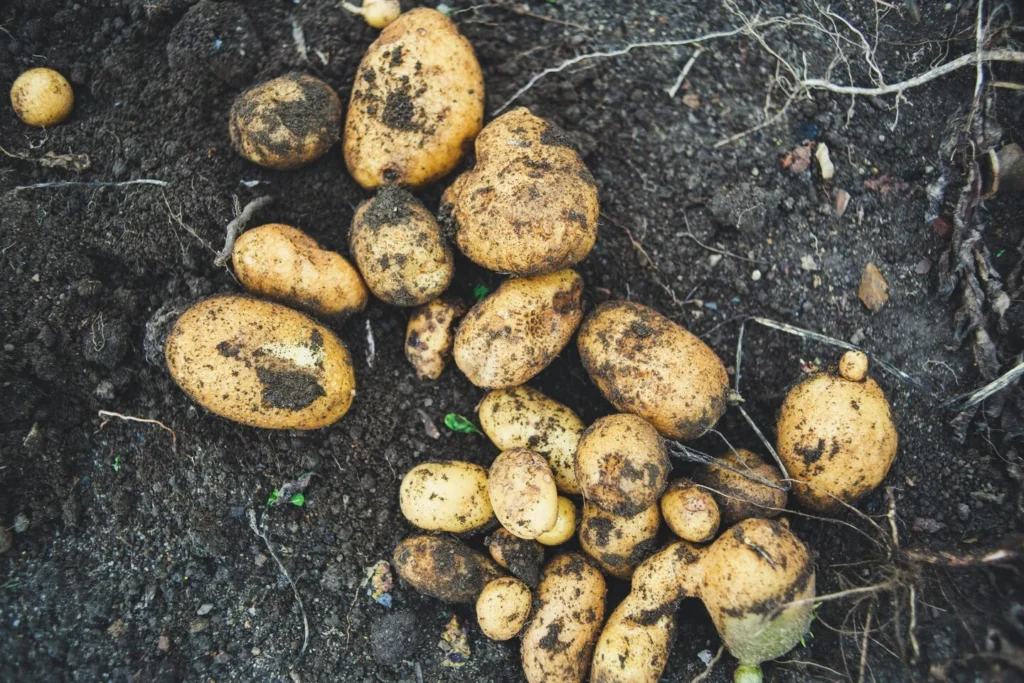
Shangi – the people’s favourite
Shangi accounts for about 80% of the market. It matures fast (75–90 days), yields heavily, and brokers love it. The downside is serious: Shangi is highly susceptible to late blight, meaning you may need 11 or more fungicide sprays per season. It also has very short dormancy (under one month), so you cannot store it for long.
Sherekea – the disease fighter
Released by CIP and KALRO in 2010, Sherekea resists both late blight and viruses. It needs only about 4 fungicide sprays compared to Shangi’s 11, saving you KSh 7,000–14,000 per acre in chemicals. Yields reach 16,000–20,000 kg per acre.
Kenya Mpya – The storage champion
With a dormancy period of 4–4.5 months, Kenya Mpya lets you hold potatoes until off-season prices peak. It also resists late blight and PLRV virus. If your strategy is to sell when prices are highest, this is your variety.
Processing varieties
For the French fries and crisps market, consider Tigoni (high dry matter content, great for chips), or Dutch imports like Markies and Manitou from Agrico PSA, which can achieve over 40 tonnes per hectare and attract premium prices through processor contracts.
Unica – for dry areas
Bred by CIP, Unica tolerates drought and grows across a wide altitude range (1,000–3,000m). For farmers in marginal zones or those expecting unreliable rainfall, Unica is the safest choice.
Potato seeds, land preparation, and planting
Why certified seed matters
Only about 5% of Kenya’s seed potato is certified. The rest is recycled farm-saved seed that carries bacterial wilt, viruses, and reduced vigour. Using uncertified seed can cut your yield by 30–50%. Certified seed costs KSh 3,000–4,500 per 50kg bag, but the return is well worth it.
Where to buy certified seed: KALRO-Tigoni (Kiambu), ADC-Molo (Nakuru), Kisima Farm (Meru/Laikipia), Agrico PSA (Nakuru), Utopian Potato Seeds, and FreshCrop Limited.
Pre-sprouting (chitting)
Start chitting 2–4 weeks before planting. Lay tubers in a single layer in egg trays with the “rose end” (most eyes) facing up. Keep them cool (around 10°C) with indirect light. You want short, sturdy green sprouts of 1–2cm. Long pale sprouts mean too much warmth or darkness.
Land preparation
Deep plough to 20–30cm, then harrow twice for a fine tilth. Mix in 2–5 tonnes of well-decomposed manure per acre during harrowing. Form ridges 25–30 cm high, spaced 75 cm apart.
Planting
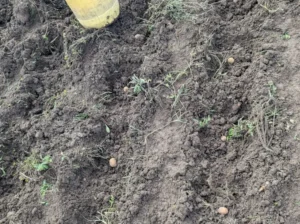
Place seed tubers with sprouts facing upward at 30cm spacing within rows, covered by 10–15cm of soil. Each acre needs about 16–20 bags of seed (800–1,000kg). Never cut seed tubers — this spreads bacterial wilt and viruses.
Fertilisation — where most farmers leave yield on the table
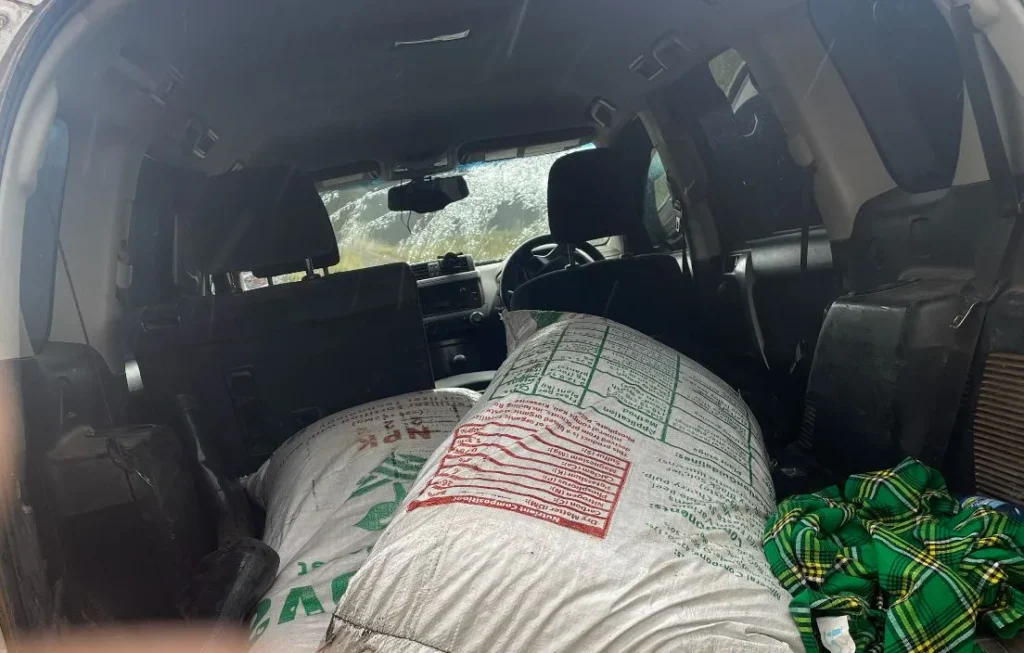
The standard practice of applying only DAP at planting gives nitrogen and phosphorus but zero potassium — a critical gap. Research by the Mavuno Zaidi programme showed that adding potassium doubled yields from 10–13 t/ha to 26 t/ha, returning KSh 23 for every KSh 1 invested in balanced fertiliser.
Recommended fertiliser schedule for potatotes
- At planting: 200 kg/acre of DAP placed in the furrow. With the government subsidy at KSh 2,500/bag through NCPB depots, this costs about KSh 5,000–11,000 for two bags.
- Top-dressing at 3–5 weeks: 50–200 kg/acre of CAN or NPK 17:17:17, applied during the first earthing-up. All fertiliser should be in by week five.
- Earthing up: Done twice — first at 3 weeks when plants reach 25cm (combine with top-dressing), and again at 6 weeks. Mound soil to half the plant height. This suppresses weeds, prevents greening, and protects tubers from tuber moth.
Fighting potato disease and pests
Disease is the number one profit killer in Kenyan potato farming. Late blight and bacterial wilt together affect over 70% of farms. Understanding these threats — and acting early — is essential.
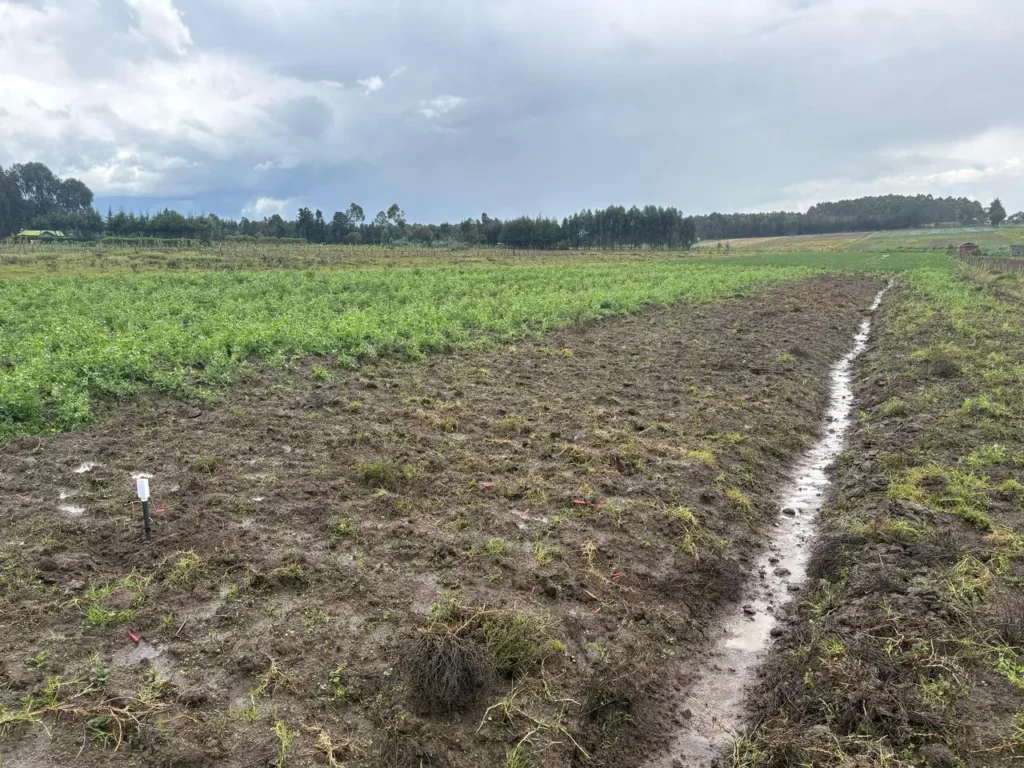
Late blight — the fast killer
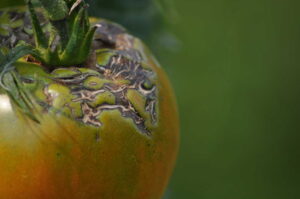
Caused by the fungus Phytophthora infestans, late blight can destroy your entire field within days during cool, wet weather. Look for water-soaked dark spots on leaves that expand into brown-black patches, often with white mould underneath.
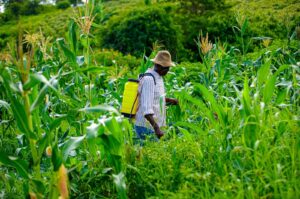
How to fight it: Use Ridomil Gold MZ 68WG (50g per 20L knapsack, costing about KSh 3,000/kg) and alternate with contact fungicides like Dithane M-45 to prevent resistance. CIP’s Decision Support Tool — a simple colour-coded disc — helps you spray only when conditions demand it, cutting applications from 12 to just 6 per season with no yield loss.
🌱 Tip from NuaSense: Our IoT sensors continuously track temperature, humidity, and soil moisture in your field. These are exactly the conditions that trigger late blight and early blight outbreaks. Instead of guessing when to spray, NuaSense gives you real-time alerts and data-driven recommendations so you spray only when needed — saving money and protecting your crop. Learn more at www.nuasense.com
Bacterial wilt — the silent plague
This soil-borne bacterium (Ralstonia solanacearum) infects over 70% of Kenyan potato farms and can wipe out 50–100% of your harvest. There is no chemical cure. The bacterium survives in soil for years and spreads through contaminated seed, water, tools, and even shoes.
How to spot it: Young leaves wilt during hot afternoons. If you cut a stem and place it in clear water, you will see milky white bacterial streaming. A brown ring appears inside cut tubers.
How to manage it: Use certified seed (the single most effective step). Rotate with non-solanaceous crops for at least 5 years. Uproot and destroy infected plants immediately. Clean tools between fields. Test soil through KEPHIS before planting.
Other common potato pests
The potato tuber moth is the most destructive insect pest, boring tunnels through stored tubers and causing 23–47% storage losses. Proper earthing up during growing prevents moth access. In storage, dust tubers with Bt (Bacillus thuringiensis) mixed with sand (1:25 ratio) — it is cheap, effective, and safe. Aphids spread viruses, so control them with products like Actara 25WG or encourage natural predators like ladybugs.
A new approach: Data, biology, and nutrition working together
At NuaSense, we believe that the future of potato farming lies in combining smart technology with natural inputs. That is why we have partnered with two innovative companies for an ongoing study aimed at increasing potato yields while safeguarding crops against disease.

The three partners
- NuaSense — We provide IoT sensors deployed directly in potato fields. These sensors continuously collect data on temperature, humidity, soil moisture, and other key environmental factors. Our platform then uses this data to give farmers actionable recommendations: when to irrigate, when conditions favour blight, and how to optimise growing conditions for maximum yield.
- Coastal Biotech — Based in Tanzania, Coastal Biotech provides biostimulants — natural products that strengthen the plant’s own immune system and improve its ability to absorb nutrients. Healthier plants resist disease better, recover faster from stress, and produce larger tubers.
- ProTeen — ProTeen produces insect-based organic fertiliser that delivers balanced nutrition to the soil. Their products improve soil health, increase microbial activity, and provide the nitrogen, phosphorus, and potassium that potatoes need — all from a sustainable, circular economy source.
Together, the three companies are conducting a joint study to measure the combined impact of data-driven field management (NuaSense), biostimulant application (Coastal Biotech), and organic fertilisation (ProTeen) on potato yields and crop health in East Africa. Early results are promising, and we look forward to sharing findings with the farming community as the study progresses.
What it costs and what you can earn
Potato farming requires a real investment, but the returns can be excellent if you manage well.
| Item | Price (KSh) |
|---|---|
| Certified seed (16–20 bags) | 48,000 – 90,000 |
| Land lease (per season) | 5,000 – 20,000 |
| Land preparation | 7,000 – 15,000 |
| DAP + CAN fertiliser | 7,500 – 16,500 |
| Manure | 1,800 – 4,000 |
| Fungicides (6–8 sprays) | 4,000 – 12,000 |
| Insecticides | 1,000 – 3,000 |
| Labour (planting to harvest) | 15,000 – 25,000 |
| Transport & marketing | 4,000 – 8,000 |
| TOTAL INVESTMENT | ~95,000 – 195,000 |
What you can earn: A typical smallholder harvests 60–100 bags of 50kg per acre. With good management, this jumps to 150–200 bags. At wholesale prices of KSh 2,500–4,000 per 50kg bag, well-managed farms can net KSh 90,000–200,000 per acre per year across two rainfed seasons.
The biggest profit lever is timing. Potato prices swing dramatically between seasons — from as low as KSh 9/kg during the July–August glut to over KSh 100/kg during dry-season scarcity. If you grow a variety with long dormancy (like Kenya Mpya or Dutch Robjyn) and store your harvest for 2–3 months, you can sell at 3–5 times the immediate post-harvest price.
After the harvest: reducing losses
Kenya loses an estimated 19% of its potato production at the farm level — worth about KSh 12.9 billion every year. Most of this damage happens during harvesting itself, not in storage.
Simple steps that make a big difference
- Dehaulm 2 weeks before digging by cutting the foliage. This toughens the skin and reduces damage during harvest. Only 15% of farmers do this — be one of them.
- Harvest on dry days using a fork jembe (never a hoe). Train your labourers to handle tubers gently and avoid drops of more than 15cm.
- Cure potatoes for 10–14 days in a cool, dark, ventilated space at 10–15°C. A protective layer forms over wounds, dramatically reducing rot during storage.
- Use diffused light stores (DLS) for seed storage. These simple structures use indirect light and ventilation to keep seed viable for 5–8 months. For ware potatoes, store in cool, dark, dry rooms and avoid plastic bags.
Most farmers sell to brokers at the farm gate right after harvest — the worst possible timing. Here are better strategies:
- Target processor contracts: Companies like Sereni Fries, Deepa Industries, and Tropical Heat buy specific varieties at pre-agreed prices, giving you income stability.
- Join a cooperative: Aggregating volumes gives you better bargaining power and access to platforms like M-Shamba that cut out middlemen.
- Time your sales: Plant in September–October to harvest in December–January when holiday demand and dry-season scarcity push prices to their annual peak.
- Explore value addition: Potato flour, packaged chips, and frozen fries offer 30–50% higher margins than selling fresh. The domestic frozen fries market is still largely served by imports — a huge opportunity.
Ready to Grow Smarter?
Stop guessing. Start growing with data.
NuaSense IoT sensors monitor your potato fields 24/7 — tracking the exact conditions that trigger blight, guiding your irrigation, and helping you make decisions based on real data instead of guesswork.
Together with our partners Coastal Biotech (biostimulants) and ProTeen (organic fertiliser), we are building a new model for productive, sustainable potato farming in East Africa.
Visit www.nuasense.com to learn how our sensors can help your farm.