Brought to you by NuaSense — smart IoT sensors helping Kenyan farmers grow more and lose less.
Maize is more than just a crop in Kenya. We eat it as ugali, we boil it with beans for githeri, and we roast it at roadside stalls across the country. About 85% of Kenyans depend on maize as their main food, and the average person consumes roughly 98 kilograms of it every year. It is grown by over 4.5 million farmers on about 2.4 million hectares, making it the most widely cultivated crop in the nation.
And yet, many of us are leaving huge yields on the table. The national average sits at just 1.8 tonnes per hectare — barely a third of what modern varieties can deliver when managed well. That gap is not about luck. It comes down to decisions: which seed you plant, how you prepare your soil, when you apply fertiliser, how you handle pests, and what you do with your grain after harvest.
This guide walks you through the full maize production cycle, step by step, with practical advice drawn from KALRO research, CIMMYT trials, and the hard-won experience of farmers across Kenya’s diverse growing regions.
How to choose the best maize variety for growing maize in Kenya
If there is one decision that determines half your yield before you even put seed in the ground, it is variety selection. A highland hybrid planted in semi-arid Machakos will fail, and a dryland variety in the wet Rift Valley highlands will underperform. Match your seed to your altitude, rainfall, and the pests common in your area.
Highland areas (1,700 – 2,300 m): Trans Nzoia, Uasin Gishu, Nandi
H6218 from Kenya Seed Company is currently the top performer, with a yield potential of 52–56 bags per acre and maturity of 160–190 days. ADC 600-23A from the Agricultural Development Corporation has outperformed the old workhorse H614D by up to 43% in trials and carries stronger resistance to grey leaf spot (GLS) and rust. If you are still planting H614D, it may be time to reconsider — it yields about 40% less than these newer hybrids.
Mid-altitude areas (1,000 – 1,800 m): Western Kenya, Central Kenya, parts of Eastern
DK8031 (Bayer/DeKalb) is a popular choice here, yielding 32–38 bags per acre in 3.5–4 months with good drought tolerance. WH507 from Western Seed Company matures in 120–135 days and is excellent if you sell green maize.
Dryland and semi-arid areas (below 1,000 m): Machakos, Makueni, Kitui, Coast
Early-maturing varieties are essential where rainfall is short and unreliable. Kenya Seed’s DH01–DH04 series matures in 90–120 days. The DroughtTEGO hybrids from the CIMMYT/WEMA programme average 4.5 tonnes per hectare compared to 1.8 t/ha for local varieties — that is a massive difference. For farmers on very tight budgets, the open-pollinated KDV-1 matures in just 75–90 days and you can save seed for up to three seasons.
Striga-infested areas
If you farm in Siaya, Homa Bay, Bungoma, or other Striga-prone areas, consider imazapyr-resistant (IR) varieties like FRC 425R or WH303 IR. The seed comes coated with herbicide that kills Striga seedlings as they try to attach to your maize roots.
💡 Tip: Always buy certified seed from registered agro-dealers. Counterfeit seed is a real problem in Kenya and a sure way to waste an entire season.
Soil preparation tips for growing maize in Kenya
Maize does best in well-drained, deep loam soils with a pH between 5.5 and 7.0. Many soils in Western Kenya and parts of Central Kenya are too acidic (pH below 5.5), which locks up phosphorus and stunts root growth. If you have never had your soil tested, this is the single highest-return investment you can make. A soil test costs KES 1,000–5,000 at labs like KALRO, Cropnuts, or MEA — and it tells you exactly what your soil needs instead of guessing.
For acidic soils, applying agricultural lime at about 2 tonnes per hectare, four to six weeks before planting, can dramatically improve yields. Kenyan trials have shown that liming very acidic soils can more than double maize output, yet fewer than 8% of affected farmers currently use lime.
Begin land preparation 2–3 weeks before expected rains. Break the soil to 15–20 cm depth using an ox-plough, jembe, or tractor depending on your scale, then harrow to create a fine, level seedbed. In semi-arid areas, conservation tillage using rippers that disturb only about 30% of the soil surface helps conserve moisture — and research has shown this approach can double yields compared to conventional ploughing.
When and how to plant maize in Kenya for maximum yield
Here is a number worth remembering: for every week you delay planting after the rains arrive, you lose about 2.5 bags of maize per acre. That is real money walking away. If you can, practise dry planting — putting seed in the ground just before rains arrive — to capture the full growing season.
Long rains (March–May) are the main planting window for most of Kenya. In the Rift Valley, Western, Central, and Nyanza regions, aim for mid-March to early April. Short rains (October–December) are the primary season for semi-arid Eastern Kenya, where October–November planting with early-maturing varieties captures the more reliable short rains.
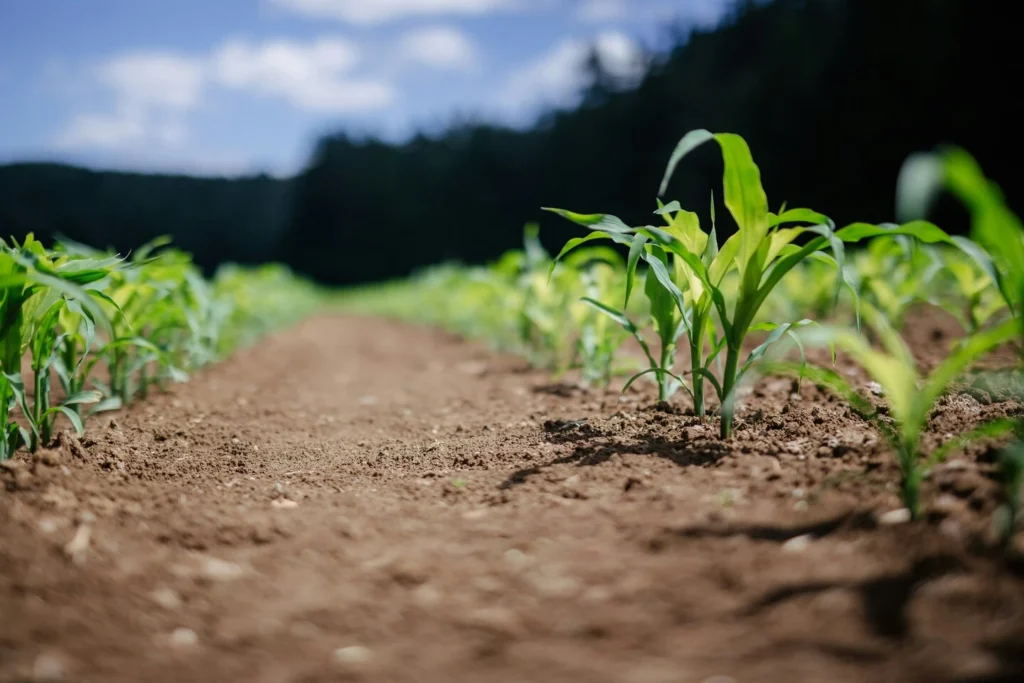
For spacing, the standard recommendation is 75 cm between rows and 30 cm between plants, giving about 44,400 plants per hectare. In high-potential areas, you can tighten to 75 × 25 cm for higher plant populations. In drylands, widen to 90 × 30 cm to reduce moisture competition. Plant one seed per hole at 5 cm depth. Place about one teaspoon of basal fertiliser in each hole, mix well with soil, then drop the seed — never let seed touch undiluted fertiliser.
💡 Tip: Intercropping maize with beans is common practice and smart farming. Plant one row of beans between every two rows of maize, about 2–3 weeks after the maize. You get a protein source, extra income, and nitrogen fixation at very little cost to your maize yield.
Best fertiliser practices for growing maize in Kenya
Fertiliser management is where many Kenyan farmers leave the most yield on the table. The standard programme — one bag of DAP at planting plus two bags of CAN for top-dressing, per acre — is a solid starting point when done correctly.
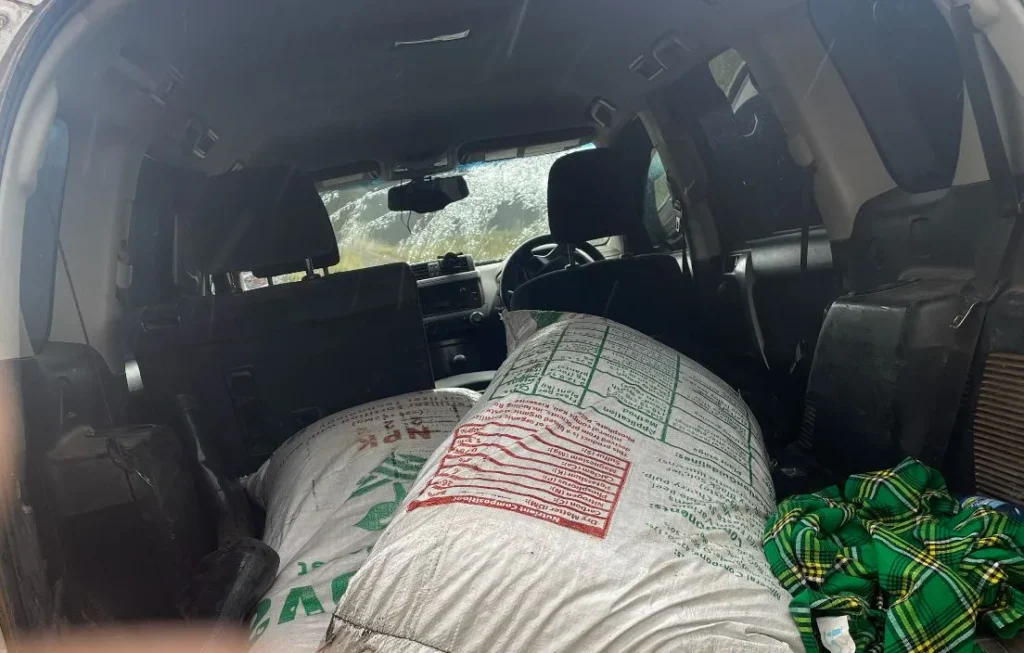
At planting: Apply 50 kg DAP (18:46:0) per acre, banded in the planting furrow 5 cm below or beside the seed. This gives your maize the phosphorus it needs for strong root establishment. For acidic soils, multi-nutrient blends like Marula ProTeen can outperform DAP significantly — trials have shown over 100% greater yield compared to standard DAP/CAN programmes on acidic soils.
First top-dressing: Apply CAN (26:0:0) at 50–75 kg per acre when your maize reaches knee height, roughly 4–6 weeks after planting. Spread it 10–15 cm from the plant base, not touching the stem. A second top-dressing at tasseling is worth doing in high-rainfall areas.
Under the government’s e-voucher system, you can access subsidised fertiliser at KES 2,500 per 50 kg bag (versus market prices of KES 3,200–6,500). Register via USSD code *707# and pay through M-Pesa. Over 7 million farmers are now in the KIAMIS digital system.
⚠️ Common mistake: Top-dressing by calendar date instead of by growth stage. Different varieties grow at different speeds. Watch your crop and apply CAN when it reaches knee height, not just “four weeks after planting.”
Water and irrigation tips for growing maize in Kenya
Maize needs 500–800 mm of rainfall spread across the growing season. The most critical period is tasseling and silking (around weeks 8–10). Even a single week without water at this stage can cut your yield by 40–50%.
If you are in a semi-arid area and considering irrigation, drip systems cost KES 75,000–100,000 per acre to install and deliver water with 90–95% efficiency — far better than furrow irrigation at 50–60%. But even without irrigation, simple water conservation techniques make a huge difference:
Tied ridges — cross-ties in furrows that create small basins to trap rainwater — have recorded the highest yields and water-use efficiency in Kenyan semi-arid trials. Zai pits (planting pits about 60 × 60 × 60 cm filled with manure-enriched soil) have increased yields four to ten times over conventional tillage. And simple mulching with 5–10 cm of crop residues reduces evaporation and helps regulate soil temperature.
How to control pests and diseases when growing maize in Kenya
Fall armyworm — the pest every maize farmer must watch for
Since arriving in Kenya in 2017, fall armyworm (FAW) has become the most destructive maize pest in the country, capable of wiping out entire fields if not caught early. The larvae have a distinctive inverted Y-shaped marking on their head and feed aggressively on leaves, whorls, and ears. Start scouting your fields from 2–3 weeks after planting. Chemical options registered with Kenya’s PCPB include products based on emamectin benzoate, flubendiamide, and indoxacarb. Biological alternatives like Fawligen (virus-based) and Bt products are also effective and safer for beneficial insects.
Stem borers and the push-pull revolution
Stem borers cause average losses of 20–40% across Kenya. The most effective response is push-pull technology, developed by ICIPE in Nairobi. You intercrop Desmodium between your maize rows (it repels stem borer moths and suppresses Striga) and plant Napier grass or Brachiaria as a border crop (it attracts moths but traps and kills their larvae). Trials have shown an 83% reduction in fall armyworm larvae, near-complete Striga elimination after 2–3 seasons, and yield jumps from below 1 t/ha to 3.5 t/ha.
Maize Lethal Necrosis (MLN)
MLN devastated Kenya from 2011 onwards, destroying an estimated 126,000 tonnes worth $52 million. The disease is caused by two viruses working together and spreads through insect vectors. The good news is that CIMMYT and KALRO have since developed 19 MLN-tolerant hybrids. Always use certified, pathogen-free seed, control aphids and thrips, and rotate maize with non-cereal crops to break the disease cycle.
Striga — western Kenya’s invisible thief
Striga (witchweed) causes 30–100% yield losses across western Kenya and Nyanza. The parasite damages your maize underground before it even becomes visible. An integrated approach works best: combine IR maize varieties with nitrogen fertiliser and Desmodium intercropping through push-pull. This three-pronged strategy addresses Striga, stem borers, and soil fertility all at once.
Smart Monitoring: Using data to protect your maize crop in Kenya
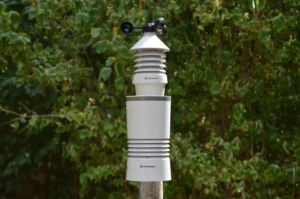
Catching pest outbreaks and disease-friendly conditions early is half the battle. At NuaSense, we are building IoT sensors that sit in your field and continuously track environmental conditions — temperature, humidity, soil moisture, and more. Our system can detect the conditions that favour fall armyworm outbreaks, fungal infections like grey leaf spot, and aflatoxin-producing moulds before they become a full-blown problem. Instead of guessing when to spray or irrigate, you get data-driven recommendations sent directly to you.
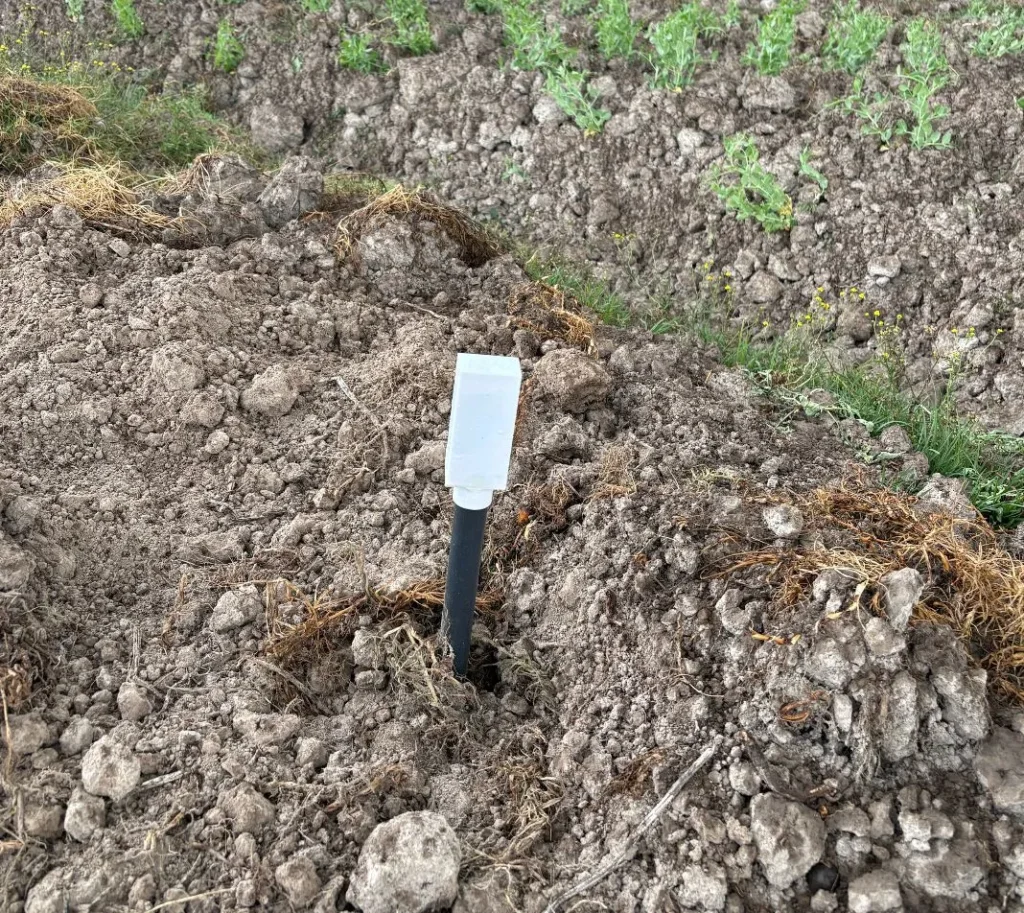
We are currently running a joint study with two partners to help Kenyan farmers increase yields while safeguarding their crops against pests and disease:
- 🌱 Coastal Biotech (Tanzania) — providing biostimulants that strengthen plant resilience and improve nutrient uptake naturally.
- 🪱 ProTeen — supplying organic fertiliser derived from insect protein, offering a sustainable alternative to synthetic inputs.
Together, NuaSense handles the real-time data tracking, Coastal Biotech provides the biostimulant, and ProTeen delivers the fertiliser. The goal is simple: prove that combining smart monitoring with biological inputs can boost yields and protect crops at a cost that works for Kenyan farmers.
Weed control tips for growing maize in Kenya
Maize needs to be weed-free from emergence through the six-leaf stage — roughly the first 4–6 weeks. If weeds compete during this window, you can lose 50–60% of your yield. There is no recovering from a bad start.
For pre-emergence herbicides (applied within three days of planting on moist soil), products like Lumax 537.5 SC are effective against grasses. For post-emergence, Stellar Star handles broadleaf weeds well. Always rotate herbicide types between seasons to prevent resistance — this is already happening with some weed species in Kenya.
If you rely on manual weeding, the first weeding at 2–3 weeks after emergence is absolutely non-negotiable, followed by a second weeding at 5–6 weeks. Missing either window will cost you dearly at harvest.
How to harvest and store maize in Kenya to reduce losses
This is where 12–20% of Kenya’s maize simply disappears every year — and in humid areas like Western Kenya, storage losses can reach 56%. Getting this right is like harvesting your field twice.
When to harvest
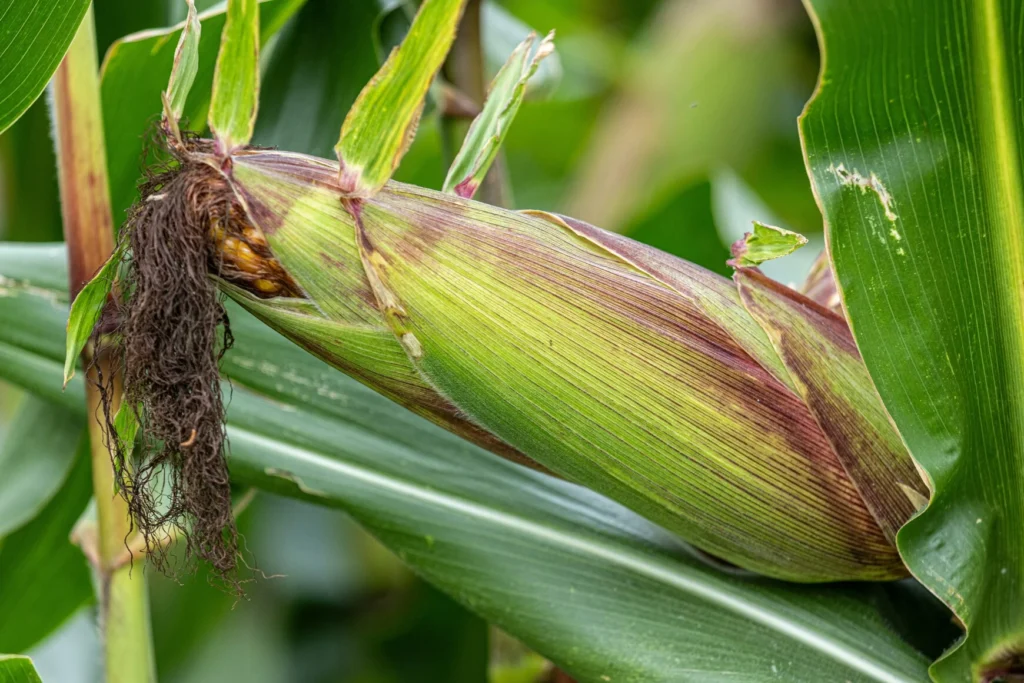
Maize is ready when a black layer forms at the base of the kernels — check by snapping a kernel off a cob and looking at the bottom. Husks should be brown and papery, cobs drooping, and kernels hard enough that they resist scoring with your thumbnail.
Drying is your defence against aflatoxin
The target moisture for safe storage is 13.5% or below. Spread harvested cobs or shelled grain on clean tarpaulins — never on bare ground. A simple moisture test: place dried salt and maize kernels in a glass bottle and shake hard. If salt sticks to the grain, it is still too wet.
Aflatoxin is a serious concern, especially in Eastern Kenya. The biocontrol product Aflasafe KE01, manufactured at KALRO Katumani, reduces aflatoxin by 80–99% when applied at 10 kg/ha before flowering. Combined with proper drying and hermetic storage, it can keep your grain safe even for export.
Hermetic storage has changed the game
PICS bags (triple-layer hermetic bags) cost just US$2–3 each and achieve 95–100% insect mortality after about six months by depleting oxygen naturally. Grain damage drops from 71% in ordinary bags to under 6%. Metal silos (hermetically sealed galvanised iron cylinders) cost about KES 20,000 for a 1.8-tonne unit and virtually eliminate storage losses for 12+ months.
💡 Pro tip — sell smart: Maize prices are lowest right after harvest and typically rise 30–50% over the next three to six months. If you store your grain in hermetic bags or a silo and sell in June instead of January, you can add KES 1,000–1,500 per bag without doing any extra farming.
Best maize growing regions in Kenya: A region-by-region guide
| Region | Best Varieties | Key Challenges | Top Tips |
|---|---|---|---|
| Rift Valley (Trans Nzoia, Uasin Gishu, Nandi) | H6218, ADC 600-23A, Pannar 691 | Grey leaf spot, lodging, FAW | Drop H614D for modern hybrids; plant mid-March |
| Western Kenya (Kakamega, Bungoma) | WH507, DK8031, WH402 | Striga, soil fertility decline, stem borers | Adopt push-pull; use IR varieties in Striga zones |
| Nyanza (Kisii, Homa Bay, Siaya) | FRC 425R, WH303 IR, H6210 | Striga (severe), stem borers | Push-pull + IR maize is the most effective combo |
| Central Kenya (Kiambu, Murang’a) | WH507, H6213 | Small farm sizes, acidic soils | Lime your soil; sell green maize to Nairobi |
| Eastern Kenya (Embu, Meru, Machakos, Kitui) | DH01–04, KDV-1, DroughtTEGO | Drought, aflatoxin, erratic rainfall | Use tied ridges/zai pits; apply Aflasafe; plant short rains |
| Coast / Arid zones | KDV-1, DH01 | Low rainfall, heat stress | Deep planting (5–10 cm); dry planting; mulch heavily |
Cost of growing maize in Kenya and expected profits
Total production costs range from about KES 27,000 to 57,000 per acre depending on whether you use subsidised inputs and own your land. With rented land and market-rate fertiliser, costs can reach KES 65,000–77,000.
| Cost Item | Approximate Range (KES) |
|---|---|
| Land preparation | 3,000 – 5,000 |
| Hybrid seed (10 kg) | 3,000 – 5,000 |
| Planting fertiliser (DAP, 2 bags) | 5,000 – 13,000 |
| Top-dressing fertiliser (CAN, 2 bags) | 3,900 – 10,000 |
| Herbicides & pesticides | 2,000 – 5,000 |
| Labour (planting, weeding, harvest) | 5,000 – 10,950 |
| Land rent (if applicable) | 10,000 – 20,000 |
Typical smallholders harvest 8–15 bags per acre. With certified seed, proper fertiliser, and good management, 20–30 bags is achievable. Commercial farmers with optimised practices regularly hit 30–40 bags. At the current NCPB buying price of KES 3,500–4,000 per 90 kg bag, a well-managed acre producing 25 bags generates KES 87,500–100,000 in gross revenue.
Start growing smarter maize in Kenya today
The gap between Kenya’s average maize yield and what proven technologies can deliver is enormous — and closing it does not require magic. The farmers achieving 30+ bags per acre are selecting the right variety for their zone, testing their soil, planting on time, applying the right fertiliser at the right stage, managing pests early, and storing grain properly.
At NuaSense, we believe data is the missing piece for most Kenyan farmers. Our IoT sensors give you real-time field data and early warnings for pest and disease conditions — so you can act before problems escalate. Whether you farm one acre or one thousand, data-driven decisions are the shortest path from 8 bags to 35 bags per acre.
Visit www.nuasense.com to learn how smart sensors can help you grow more maize and lose less.