Agriculture is the backbone of Kenya’s economy. It contributes over 22% of the country’s GDP, employs more than 40% of the workforce, and supports the livelihoods of millions of smallholder farmers across every county. But this backbone is under serious pressure.
Kenya’s climate is changing. Temperatures are rising, rainfall is becoming more unpredictable, droughts are lasting longer, and floods are hitting harder. For farmers who depend almost entirely on rain to grow their crops, these shifts are not abstract — they are felt in every failed harvest, every dried-up water pan, and every season that no longer behaves the way it used to.
The good news is that solutions exist. From drought-tolerant seed varieties to precision agriculture tools like NuaSense, which gives farmers real-time soil, water, and weather data through affordable sensor systems, Kenyan agriculture is not without options. The challenge is getting these solutions to the farmers who need them most, before the window narrows further.
This article breaks down what is happening to Kenya’s crops, why it is happening, what it means for your farm, and what you can do about it.
How Kenya’s changing climate is disrupting crop production
To understand why crop yields are falling, you first need to understand how Kenya’s climate has shifted over the past few decades. The changes are measurable, well-documented, and accelerating.
Rising temperatures and shifting rainfall patterns across farming regions
Since the 1960s, Kenya’s average temperature has risen by about 1°C. That may sound small, but for crops like maize, tea, and coffee, even half a degree can change how well they grow, how much water they need, and whether pests and diseases take hold. In 2023, Kenya recorded its warmest year on record.
The bigger problem for most farmers is what is happening to rainfall. The long rains from March to May, which have historically been the most important growing season, have been declining since the 1980s. The short rains from October to December have become more erratic. Some seasons bring too little rain, others bring too much, and the timing has shifted in ways that make it very difficult to plan planting and harvesting.
A study published in Regional Environmental Change found that between 1980 and 2020, over 76,000 square kilometres of Kenyan land shifted from cooler to hotter climate zones. That is not a small change — it means the conditions that certain crops need to thrive are literally moving to different parts of the country.
The growing threat of droughts and floods to planting seasons
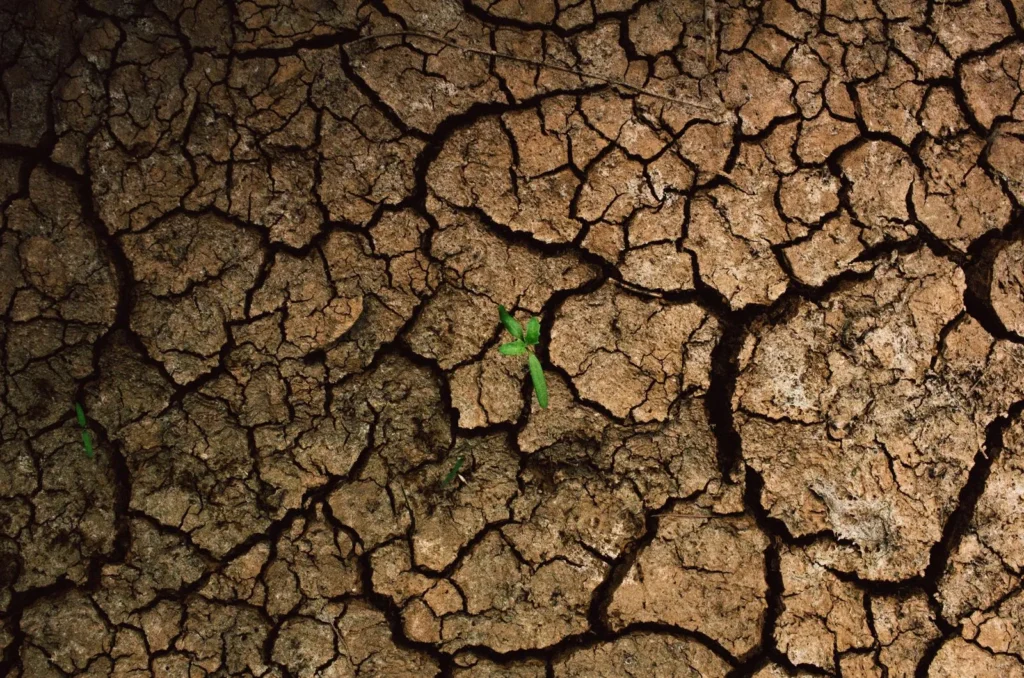
Between 2020 and 2023, Kenya experienced five consecutive failed rainy seasons — the longest drought sequence in over 40 years. At its peak, 4.35 million Kenyans needed humanitarian food assistance. Livestock deaths reached 2.6 million head, and 95% of water pans dried up completely.
Then, almost immediately after the drought broke, El Niño-driven floods in late 2023 and 2024 killed over 440 people, displaced hundreds of thousands of households, and destroyed more than 17,000 acres of farmland. This rapid swing between extreme drought and devastating floods has become Kenya’s new normal. Since 2016, out of 13 rainy seasons, eight were dry or very dry, three were excessively wet, and only two were what most farmers would consider normal.
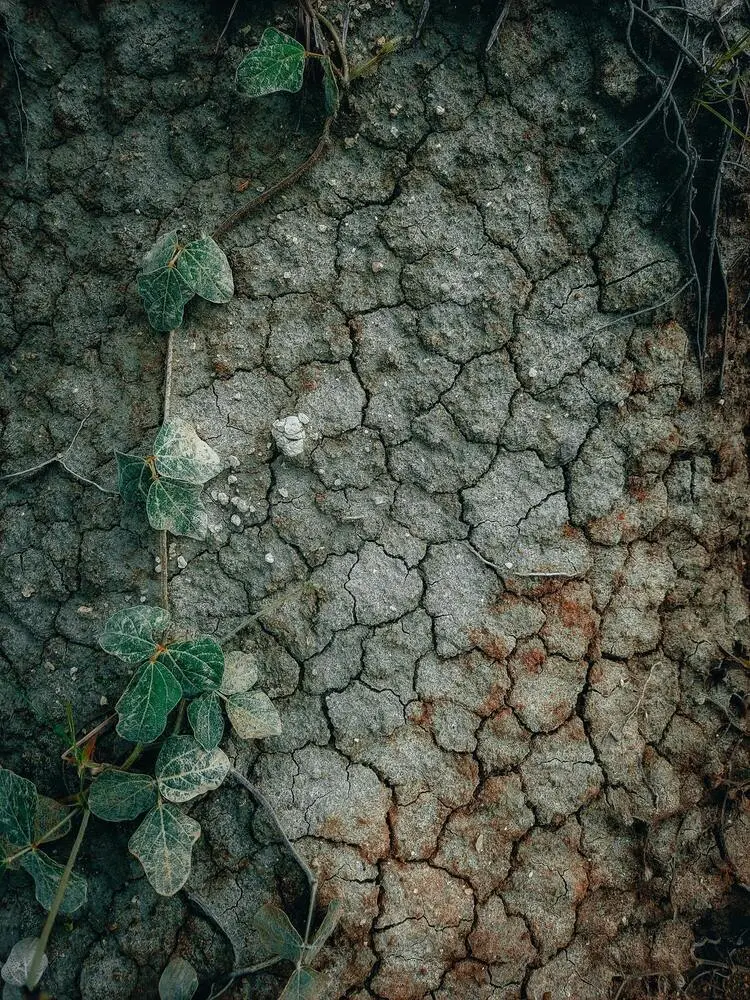
For a country where 98% of agriculture depends on rainfall, this level of unpredictability is devastating.
How shrinking climate-suitable farmland is reducing what Kenya can grow
Here is a statistic that every Kenyan farmer should know: between 1980 and 2020, the total area of land in Kenya that is climatically suitable for growing the country’s primary crops decreased by 28%. During that same period, Kenya’s population more than tripled.
Less suitable land, more mouths to feed — that is the fundamental equation that climate change is forcing on Kenyan agriculture. Only about 20% of Kenya’s total land area is considered suitable for cultivation in the first place. The arid and semi-arid lands that cover 80% of the country are becoming even more marginal as temperatures climb and rainfall declines.
Which Kenyan crops are most affected by climate change
Climate change does not hit all crops equally. Some are more sensitive to temperature changes, others to water stress, and others to the pests and diseases that thrive in warmer conditions. Here is what the data shows for Kenya’s most important crops.
Maize and staple cereals under pressure from erratic weather
Maize is Kenya’s most important food crop. It is grown on 2.4 million hectares, provides over half of the country’s calorie supply, and is cultivated by the vast majority of smallholder farmers. But maize yields in Kenya have been declining at a rate of 0.07 tonnes per hectare per decade — while the global average has been increasing.
During the 2021-2022 drought, maize production dropped 12.8% in a single year. In marginal agricultural areas, harvests fell to just 45-50% of the five-year average. By early 2026, a severe drought in central Kenya caused near-total failure of maize and wheat production in Timau and Laikipia.
Kenya currently produces about 4 million metric tonnes of maize per year, but yields average only 1.67 tonnes per hectare — far below the global average of 4.9 tonnes per hectare. Part of this gap is due to limited inputs and technology, but climate stress is a major and growing factor.
Wheat tells a similar story. Kenya produces only about 20% of the wheat it consumes, importing the rest. Wheat-suitable areas have contracted by 29% over the past four decades, and many farmers in traditional wheat-growing areas are abandoning the crop altogether because it no longer performs reliably.
Tea and coffee losing ground as growing zones shift uphill
Tea is Kenya’s top export crop, earning approximately $1.5 billion in 2024 and supporting around 7 million livelihoods. But climate-suitable areas for tea cultivation shrank by 37% between 1980 and 2020. An FAO survey of 700 tea growers found that over 40% had noticed significant changes in growing seasons, with drought causing 14-20% yield losses and 6-19% plant mortality.
Looking ahead, optimal tea-growing zones could shrink by another 25%, and medium-suitability zones by 40%, by 2050. Tea production will need to shift from its current altitudes around 1,500 metres to above 2,000 metres — but land at those altitudes is limited and often forested.
Coffee faces the same problem. The optimal producing zone is already migrating uphill, from 1,400-1,600 metres to 1,600-1,800 metres above sea level. Areas below 1,400 metres are seeing the steepest declines in suitability. For smallholder coffee farmers who cannot simply relocate their farms to higher ground, this is an existential challenge.
The hidden impact on legumes, rice, sugarcane, and horticultural crops
While maize, tea, and coffee get the most attention, other crops are suffering just as much or more.
Rice saw the largest decline in climate-suitable area of any Kenyan crop — a staggering 54% reduction between 1980 and 2020. Kenya already produces only about 10% of the rice it consumes, and this gap is widening. The Mwea Irrigation Scheme, which produces two-thirds of Kenya’s domestic rice, experienced disrupted crop cycles due to water rationing during the 2026 drought.
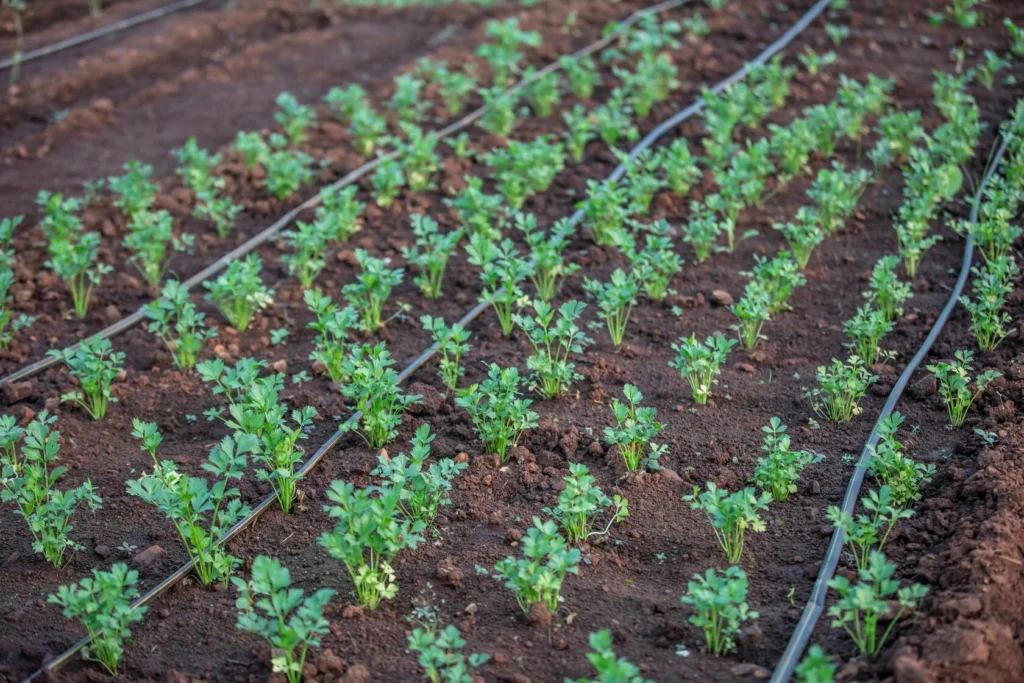
Sugarcane-suitable areas fell by 43%, and production between 2022 and 2023 crashed by nearly 37% — the steepest drop of any Kenyan crop in that period.
Legumes like beans, cowpeas, and green grams are critical for food security, particularly in semi-arid regions. Dry beans alone were cultivated on 1.23 million hectares in 2024, making them the second-most-valuable food crop. These crops are relatively drought-tolerant compared to maize, but even they have limits, and yields suffer when rainfall drops below minimum thresholds.
Kenya’s cut flower industry — the world’s second-largest, earning nearly $1 billion annually — faces rising water costs around Lake Naivasha and increasing temperature stress that affects bloom quality and timing.
The ripple effects of climate change beyond the farm
Falling yields are only part of the story. Climate change also amplifies a range of indirect threats that compound losses for farmers.
Rising pest and disease outbreaks linked to warmer conditions
Warmer temperatures are creating better conditions for crop pests and diseases that were previously limited by cooler climates. Fall armyworm, first detected in Kenya in 2016, now affects 83% of maize farmers and destroys an estimated 1 million tonnes of maize annually — roughly a third of the total harvest.
The 2019-2020 desert locust invasion, the worst in decades, affected over 30,000 hectares of cropland and nearly 580,000 hectares of pasture. Tuta absoluta has caused tomato yield losses of up to 98% in affected areas.
For coffee farmers, coffee berry borer populations are projected to grow 8.5% for every degree Celsius of warming. Tea faces increased pressure from diseases that thrive in the warmer, more humid conditions that are spreading to previously cool highland areas.
Aflatoxin contamination, which is worsened by drought stress on crops, is a persistent and dangerous problem. A severe outbreak in 2004 killed 124 people, and the toxin regularly renders millions of bags of stored maize unfit for consumption.
Water scarcity, soil degradation, and post-harvest losses
Water is becoming scarcer in the areas that need it most. Mount Kenya’s glaciers have lost more than half their area since 2016 and are predicted to vanish entirely by 2030. These glaciers feed rivers that supply water to over 2 million people and support irrigation for farms across the central highlands. Water levels on the Ngare Ngare River have already dropped 30% in the past decade.
Soil degradation compounds the problem. When rains do come, they often arrive as intense downpours that erode topsoil rather than soaking into the ground. Continuous cropping without adequate soil management depletes nutrients, and the combination of heat stress and poor soil health creates a downward spiral for yields.
Post-harvest losses remain devastating. Approximately 30% of all stored produce in Kenya is lost due to inadequate storage — a figure that worsens when erratic weather prevents proper crop drying. For a farmer who has already lost yield in the field, losing another third of the harvest in storage is a double blow.
This is where real-time data becomes critical. Knowing exactly when soil moisture drops below a threshold, when humidity levels create disease risk, or when conditions are right for drying and storage can make the difference between a profitable season and a devastating loss. Sensor-based monitoring systems like those from NuaSense — which deliver soil moisture, water quality, and air condition data directly to farmers via SMS and WhatsApp — are designed to close exactly this information gap, turning reactive decisions into proactive ones.
What falling yields mean for food security and farmer livelihoods
The human impact of declining crop yields is severe. During the 2020-2023 drought, 5.4 million Kenyans were classified as being in acute food crisis. In the arid and semi-arid counties of northern Kenya — Turkana, Marsabit, Wajir, Garissa, and Mandera — poverty rates exceed 80% and food insecurity is chronic rather than occasional.
Even in Kenya’s high-potential agricultural zones, the economics of farming are becoming harder. Input costs rise while yields fall. Market prices fluctuate wildly depending on whether it was a drought year or a flood year. Young people see the risks and migrate to cities, leaving an ageing farming population with less labour.
The World Bank estimates that without adaptation, climate change could reduce Kenya’s GDP by up to 7% from its baseline by 2050 and push 1.1 million additional people into poverty. Climate-related agricultural losses already total approximately $154.5 million per year. Droughts alone cost an estimated 8% of GDP every five years.
How Kenyan farmers can adapt to protect their crop yields
The projections are sobering, but there is clear evidence that adaptation works. Farmers who have access to improved technologies, better information, and some form of financial protection are already proving that yields can be maintained and even improved despite a changing climate.
Drought-tolerant varieties and crop diversification that are working
One of the most impactful adaptations available to Kenyan farmers today is switching to improved crop varieties that are bred for climate resilience. The partnership between CIMMYT and KALRO has developed drought-tolerant maize varieties now grown on over 6 million hectares across eastern and southern Africa, producing additional grain worth up to $1.5 billion annually.
KALRO’s Nyota bean variety — drought-tolerant, fast-maturing, and rich in iron and zinc — has helped farmers like Benson Gitonga increase his harvest from 5-7 bags per acre to 9-12 bags while earning double the price at market. Women farmers in Makueni County harvested successfully even during the severe 2022-2023 drought with only 117-120mm of seasonal rainfall, thanks to these improved varieties.
Crop diversification is equally important. Sorghum is projected to see yield increases of up to 114% by the 2050s as conditions shift, making it one of the most underutilised opportunities in Kenyan agriculture. Cassava production surged from 572,000 tonnes in 2015 to nearly 946,000 tonnes in 2018 after KALRO released clean, disease-tolerant varieties. Kenya is now developing regulations to blend 10% cassava, millet, sorghum, or amaranth into maize flour — a policy that would reduce import dependency while supporting more diverse and resilient farming systems.
The message is clear: do not put all your seeds in one basket. Diversifying what you grow is one of the most practical and affordable ways to manage climate risk.
Smart farming tools — from digital platforms to weather-based insurance
Technology is transforming what is possible for Kenyan smallholder farmers, and the tools are becoming more affordable and accessible every year.
Safaricom’s DigiFarm platform has registered over 1.4 million farmers, providing access to inputs, credit, insurance, weather advisories, and market connections via basic mobile phones. Farmer Wilson Langat in Bomet County used DigiFarm to increase his maize production from 6 to 20 bags per acre. The iCow platform reaches 1.6 million users with livestock management advice.

Precision agriculture is no longer just for large commercial farms. NuaSense, a Nairobi-based company, deploys affordable IoT sensor systems that measure soil moisture, soil temperature, water quality, and air conditions in real time. The data is transmitted via long-range LoRaWAN networks — no Wi-Fi needed — and delivered as actionable insights through a dashboard, SMS, or WhatsApp. For farmers, this means knowing exactly when to irrigate, when soil conditions are right for planting, and when environmental conditions signal pest or disease risk. It is the kind of data-driven decision-making that turns climate uncertainty into manageable risk. You can learn more at nuasense.com.
Index-based weather insurance through ACRE Africa has insured over 1.7 million farmers for a combined value exceeding $181 million. Research shows that insured farmers invest more in their crops — applying significantly more fertiliser and hybrid seed — because they know a catastrophic loss will not wipe them out completely. Newer blockchain-based parametric insurance products aim to cut premiums by 30% and reduce claim processing from three months to one week.
Further Reading
- World Bank — Climate-Smart Agriculture in Kenya (Climate Knowledge Portal): https://climateknowledgeportal.worldbank.org/sites/default/files/2019-06/CSA%20KENYA%20NOV%2018%202015.pdf
- KIPPRA — Policy Brief on Climate Change and Maize Production in Kenya — Adaptation Options: https://repository.kippra.or.ke/items/83682cca-b9b0-480b-bae7-60055a72d106
- World Economic Forum — Climate Change Is Threatening Kenya’s Black Tea Industry: https://www.weforum.org/stories/2021/05/climate-change-is-threatening-kenya-black-tea-industry/
- FAO — Climate Change and Tea in Kenya — Impact Assessment: https://www.fao.org/fileadmin/templates/est/Climate_change/kenya/Project_brief_Kenya-EN_FINAL.pdf
- Springer — Economy-Wide Impacts of Climate-Induced Agricultural Yield Changes in Kenya (2026): https://link.springer.com/article/10.1007/s10584-026-04144-1
Do you want to saveguard your crops from the influence of climate change?
As temperatures rise and rainfall becomes unpredictable, precision is your best defense. NuaSense IoT sensors provide the actionable data you need to stay ahead of droughts, pests, and soil degradation.
Interested? Reach out!