Kenya’s climate is a herb farmer’s dream. Two rainy seasons, year-round sunshine, and a range of altitudes from sea level to 2,500 metres mean there’s a sweet spot somewhere in the country for virtually every culinary herb. Whether you’re working a small kitchen garden behind your house or eyeing a quarter-acre commercial plot, this guide walks you through everything you need to know — from picking the right herbs and preparing your soil, to keeping pests at bay and harvesting like a pro.
Getting started — choosing the right herbs for your farm
Before you buy a single seed packet, you need to answer two questions: which herbs actually grow well in your area, and where can you get quality planting material? Get these right, and you’re already ahead of most beginners.
The top culinary herbs that thrive in Kenya
Ten culinary herbs consistently perform well across Kenya’s farming regions: basil, rosemary, thyme, coriander (dhania), parsley, mint, oregano, chives, sage, and dill. Each has different needs, but all can be grown successfully by a smallholder with basic tools and know-how.
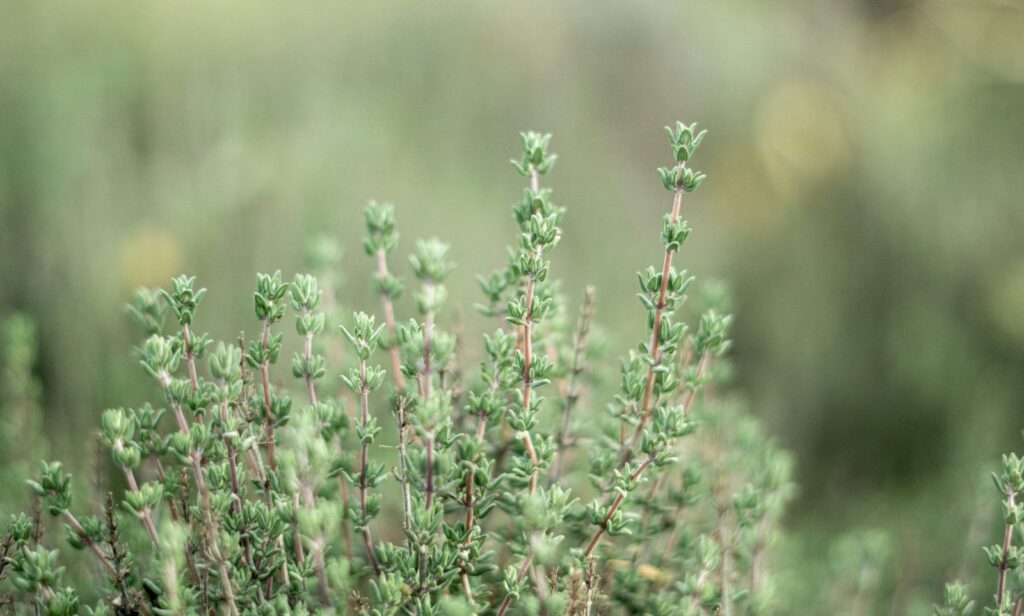
A useful way to think about them is in two groups. The Mediterranean herbs — rosemary, thyme, sage, and oregano — evolved in dry, sunny climates. They prefer well-drained soil, tolerate drought once established, and actually produce stronger flavours when they’re not pampered with too much water. The moisture-loving herbs — basil, mint, coriander, parsley, chives, and dill — need richer soil, regular watering, and can handle some shade. Keeping these two groups in separate beds with different watering schedules is the single most impactful decision you can make for your herb garden.
Of this group, coriander and basil are the fastest to return money — coriander leaves are ready to cut in just three to four weeks, and basil follows at around 25–30 days. Mint is practically indestructible once established. Rosemary and sage take longer to get going (six months to a year for a meaningful first harvest) but then produce for years as perennials.
Matching herbs to Kenya’s agro-ecological zones
Kenya’s agro-ecological zones, mapped in detail by Infonet-Biovision, range from humid highlands to arid lowlands. Each zone creates a distinct growing environment for herbs.
The highland zone (1,500–2,500 m) — Kiambu, Nyeri, Murang’a, Nyandarua, Nakuru, and parts of Meru — is Kenya’s premier herb belt. Cool temperatures between 14–25°C suit virtually all ten culinary herbs. Coriander, parsley, thyme, and dill perform especially well here because they’re prone to bolting (going to seed prematurely) in excessive heat. It’s no coincidence that most of Kenya’s commercial herb farms are clustered in places like Limuru, Rironi, and Lari in Kiambu County.
The mid-altitude zone (900–1,500 m) — parts of Embu, Machakos, Kakamega, and western Kenya — handles basil, mint, oregano, chives, and rosemary well. Basil actually prefers the warmer temperatures here. For cool-season herbs like coriander and dill, 35% shade netting can make all the difference.
The coastal and lowland zones around Mombasa and Kilifi are best suited to heat-loving basil. Most other herbs need greenhouse or shade structures in these areas. Interestingly, semi-arid counties like Machakos and Kajiado have proven surprisingly successful for rosemary, sage, and thyme — Mediterranean herbs that evolved for exactly this kind of dry, well-drained environment.
Here’s a quick reference for the most important growing conditions:
| Herb | Soil pH | Best Temperature | Best Kenyan Regions |
|---|---|---|---|
| Basil | 6.0–7.5 | 18–30°C | Nakuru, Naivasha, Meru, coast |
| Rosemary | 6.0–7.0 | 15–30°C | Kiambu, Murang’a, Nakuru |
| Thyme | 6.0–8.0 | 20–30°C | Machakos, Makueni, highlands |
| Coriander | 6.0–8.0 | 18–25°C | Nakuru, Kiambu, Nyandarua |
| Parsley | 5.5–7.5 | 15–25°C | Central highlands, Rift Valley |
| Mint | 6.0–7.0 | 15–25°C | Kiambu, Nyeri, Nakuru, coast |
| Chives | 6.0–7.0 | 15–25°C | Kiambu, Nyeri, Embu, Kakamega |
| Sage | 6.0–7.0 | 15–30°C | Kajiado, Kiambu (Limuru) |
| Dill | 5.0–6.5 | 15–21°C | Murang’a, Nakuru, highlands |
| Oregano | 6.0–8.0 | 20–30°C | Kiambu (Limuru, Lari) |
Where to source quality seeds and seedlings
Your herb garden is only as good as your planting material. In Kenya, several reliable suppliers stock herb seeds and seedlings.
For seeds, Simlaw Seeds (a subsidiary of Kenya Seed Company, based on Kijabe Street, Nairobi) carries basil, coriander, thyme, chives, and parsley. Seed packets cost KSh 45–150 for common herbs, though thyme seed can run up to KSh 420–1,040 because it’s mostly imported — which is a strong argument for propagating thyme from cuttings instead. Tropika Seeds (Latema Road, Nairobi) carries a broader herb range, and online platforms like AgriJibu and Agroduka offer nationwide delivery. You’ll also find Starke Ayres seed packets at most local agrovets.
For ready-to-plant seedlings, look into Plantech Kenya, Planty Kenya (Nairobi), Longonot Farm (Naivasha), Plant Raisers (Isinya), and Royal Seedlings (Murang’a). Expect to pay roughly KSh 5–20 per seedling.
Not all herbs need to start from seed. Rosemary has notoriously unreliable seed germination — stem cuttings of 10–15 cm rooted in moist sandy soil over three to six weeks work far better. Mint is almost never grown from seed commercially; divide runners or root stem cuttings in water (they’ll sprout roots within 5–10 days). Thyme, oregano, and sage can go either way, but cuttings give faster, more uniform results. On the other hand, coriander and dill must be direct-seeded — their taproots don’t tolerate transplanting.
Preparing your land and planting like a pro
Good soil preparation is where herb farming succeeds or fails. Herbs don’t need much space, but they’re particular about drainage and soil quality.
Raised beds, containers, and small-plot solutions
If you take one piece of advice from this entire guide, let it be this: build raised beds. A bed 1 metre wide and raised 15–30 cm above ground level improves drainage (essential for Mediterranean herbs that rot in waterlogged soil), warms the soil for faster germination, and makes weeding much easier. Frame your beds with locally available timber, stones, or bamboo.
If you’re in an arid or semi-arid area like Machakos, Makueni, or Kitui, consider the opposite approach: sunken beds dug 15–30 cm below ground level to capture and hold precious moisture. Another clever option is the zai pit technique — 30 cm diameter pits filled with manure-enriched soil, each holding an individual herb plant.
For truly small spaces, sack gardens are remarkably productive. Fill a polypropylene sack with a mix of soil and manure, cut planting holes into the sides, and you’ve got a vertical garden for basil, mint, parsley, or chives for under KSh 200. Recycled paint tins, cooking oil drums, old tyres, and cut jerry cans all work as planters too — just drill drainage holes and fill with a mix of three parts garden soil, one part well-decomposed manure, and one part coarse river sand.
Soil preparation and organic fertilisation
Before planting anything, test your soil. KALRO laboratories offer soil nutrition analysis for approximately KSh 2,500 and pathogen testing for about KSh 3,500. University labs at the University of Nairobi, JKUAT, and Egerton are also affordable options. Knowing your soil pH and nutrient profile before planting prevents wasted inputs and failed crops.
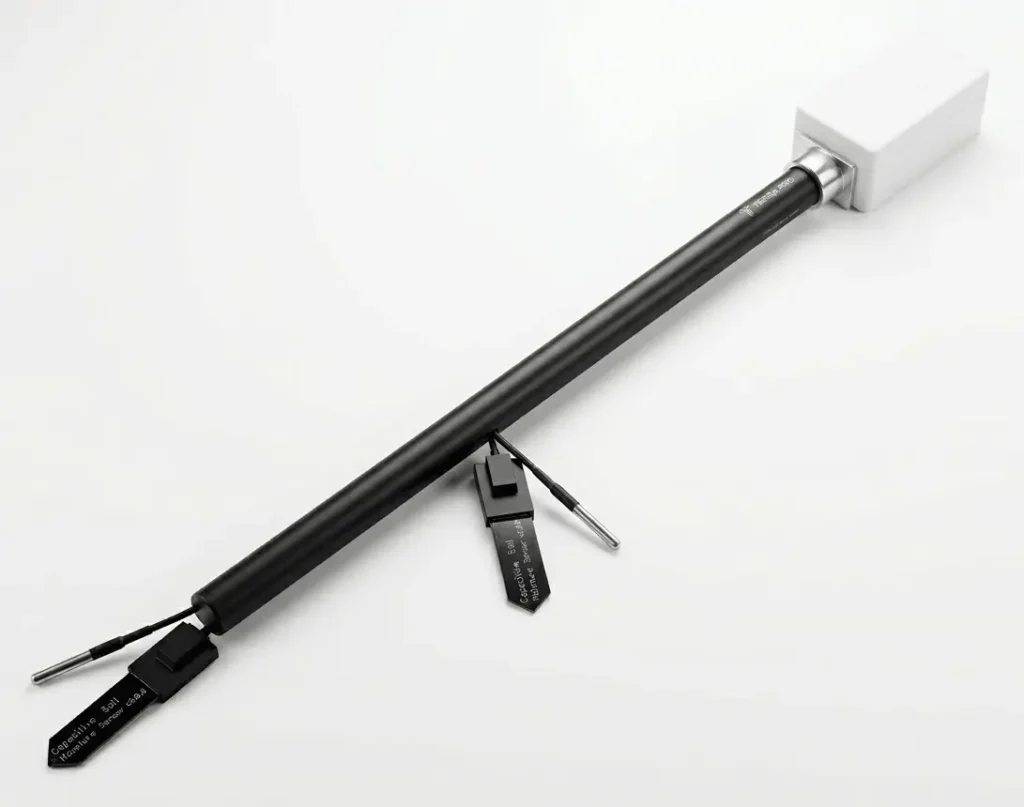
While a one-time lab test gives you a baseline, it only tells you what’s happening at that single moment. This is where technology like NuaSense comes in. Their IoT soil sensors provide continuous readings of soil moisture and temperature sent straight to your phone via WhatsApp or SMS – so you can track how your soil changes as your herbs grow and adjust your fertilisation accordingly, rather than guessing between annual lab visits.
For organic soil enrichment, work well-decomposed cow or goat manure into your beds at 5–10 tonnes per acre before planting. Never use fresh manure — it burns roots and introduces weed seeds. Compost it for at least three months first. A free and highly effective fertiliser grows wild along roadsides throughout Kenya: Tithonia diversifolia (Mexican sunflower), which is rich in nitrogen and phosphorus. Chop it, compost it, and mix it into your planting beds.
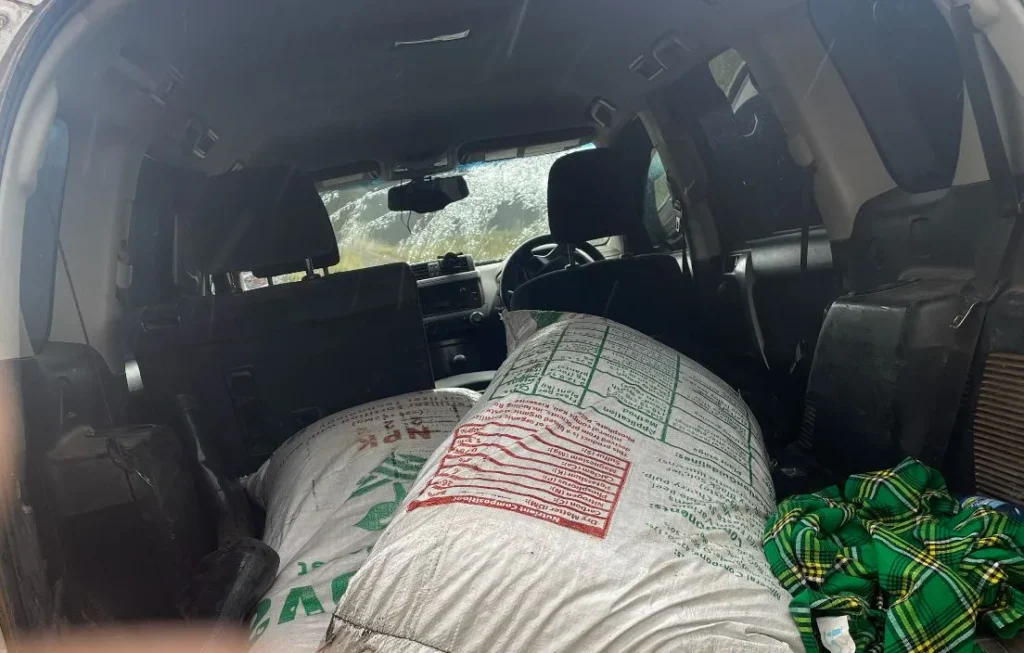
Add wood ash at 100–200 g per square metre to raise pH for herbs that prefer neutral to slightly alkaline soil (rosemary, thyme, sage, oregano). For all herbs, incorporate compost at 2–3 kg per square metre, then fine-till the surface, water thoroughly, and let the bed settle for a day or two before planting.
Smart spacing and intercropping strategies
Spacing varies a lot depending on the herb. Compact growers like thyme, chives, coriander, and parsley need 15–20 cm between plants. Basil and oregano require 20–30 cm. Rosemary and sage grow into substantial bushes — give them 60–90 cm. Mint needs 30–45 cm but must be physically contained with sunken barriers or pots. If you don’t contain it, mint will invade every neighbouring crop within a season.
Intercropping is one of the smartest strategies a Kenyan smallholder can use. According to Agriculture Kenya’s companion planting guide, planting basil alongside tomatoes repels whiteflies and aphids, while the tomato canopy provides helpful afternoon shade for the basil. Rosemary, thyme, and sage planted as borders around kale (sukuma wiki) and cabbage beds deter cabbage moths through their strong scent. Coriander attracts ladybugs and hoverflies that prey on aphids, making it a valuable interplant between spinach or bean rows.
The golden rule: group Mediterranean herbs together in one bed and moisture-loving herbs in another. This way you can water each group according to its actual needs rather than compromising.
Mulching reduces soil evaporation by 30–60%, suppresses weeds, and moderates soil temperature. Use dried grass, banana leaves, coffee husks (Central Kenya), maize stover, or sugarcane bagasse (western Kenya). Apply 5–10 cm around plants, leaving a 2–3 cm gap from stems to prevent rot. For rosemary, thyme, and sage, a thin gravel or sand mulch works better than organic material, which can trap too much moisture against the stems.
Keeping your herbs healthy — water, pests, and protection
Once your herbs are in the ground, the two things that will make or break your harvest are water management and pest control. The good news: both are very manageable on a small budget.
Affordable irrigation for every budget
Water management is where many Kenyan herb farmers struggle — not because water is unavailable, but because the watering approach doesn’t match what each herb actually needs.
The most affordable entry point is the 20-litre bucket drip kit, available from suppliers like Irrihydrosol for around KSh 2,100. Elevate a single bucket one metre on a simple stand, and it feeds two 15-metre drip lines by gravity — no electricity, no pump. It waters roughly 100 herb seedlings, and you just refill every two to three days. For slightly larger plots, kitchen garden drip kits (7 m × 15 m) cost KSh 10,000–15,000, while quarter-acre systems run KSh 35,000–45,000. Other reliable Kenyan suppliers include Grekkon Limited, Aqua Hub Kenya, and Hortitechno Greenhouses.
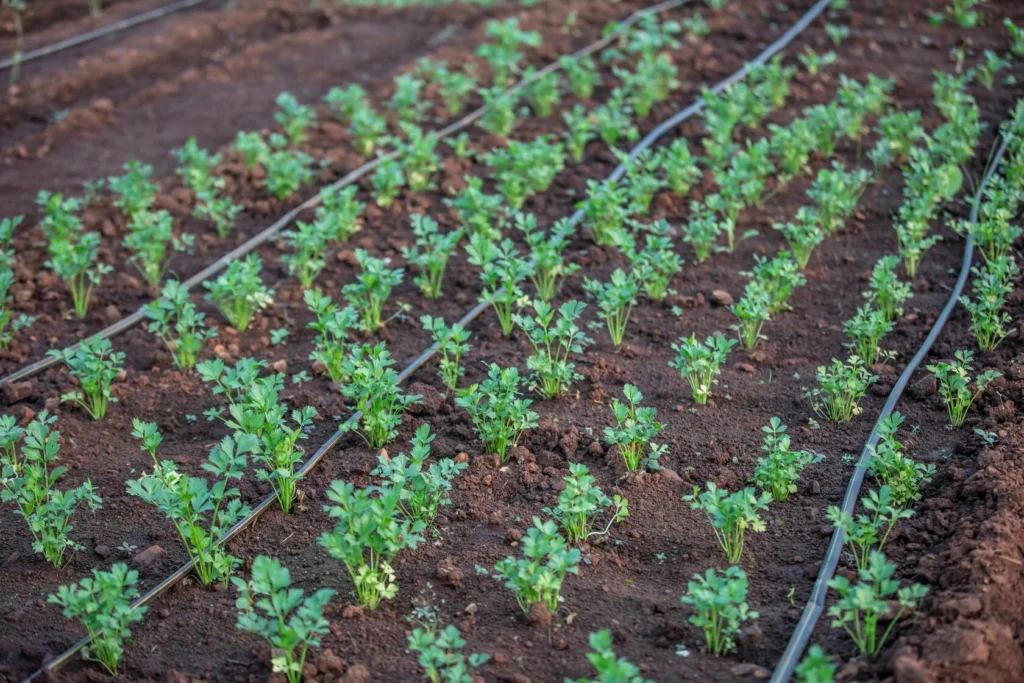
For zero-budget irrigation, try DIY bottle drippers: poke two to four small holes in a plastic bottle cap with a heated nail, fill the bottle, invert it, and push the cap end into the soil beside each plant. Water drips slowly over one to three days.
The trickiest part of watering herbs isn’t the system — it’s knowing when and how much. Mint is the thirstiest herb and needs water every one to two days. Basil, coriander, parsley, and dill need water every two to three days. But rosemary, thyme, and sage should only be watered when the soil is completely dry — roughly every 7–15 days. Overwatering is the number one killer of Mediterranean herbs.
This is another area where NuaSense’s real-time soil moisture monitoring proves its worth. Instead of guessing whether your rosemary bed is dry enough to water, you get a WhatsApp or SMS alert based on actual sensor readings. That takes the guesswork out of irrigation timing — especially important for drought-sensitive herbs that die faster from too much water than too little.
For bridging dry seasons, rainwater harvesting is essential. A 30 m² corrugated iron roof in a 1,000 mm rainfall zone captures roughly 24,000 litres per year — enough to sustain a small herb garden through two dry spells. Water tanks from brands like Kentank, Roto, or POA range from KSh 8,000 for 1,000 litres to KSh 55,000 for 5,000 litres.
Common pests and diseases (and how to beat them organically)
Culinary herbs are naturally more pest-resistant than most vegetables — their aromatic oils are a built-in defence. But Kenya’s warm, humid conditions still create challenges, especially during rainy seasons.
The most common pests are aphids (affecting all ten herbs), whiteflies (particularly on basil, mint, and parsley), spider mites (a major problem on rosemary in hot, dry weather), and leaf miners (tunnelling through basil, parsley, coriander, and dill leaves). Cutworms can destroy entire rows of young seedlings overnight.
On the disease side, basil downy mildew is the most destructive. According to Greenlife Crop Protection Africa, it can cause total yield loss when humidity stays above 85% — a real risk during Kenya’s long rains. Root rot threatens all Mediterranean herbs in poorly drained soils, and damping off kills seedlings of all herbs in unsterilised nursery soil.
Here’s where prevention-over-cure makes all the difference. NuaSense sensors can continuously track humidity and leaf moisture — the exact conditions that trigger basil downy mildew and other fungal diseases. Getting an alert before disease takes hold means you can improve ventilation, reduce watering, or move containers to drier spots in time to save your crop. That early warning is far cheaper than losing an entire basil harvest.
Kenya also has a strong organic pest control toolkit. Achook (a neem-based product from Organix Limited in Kiambu County) controls aphids, whiteflies, thrips, mites, and leaf miners with just an eight-hour pre-harvest interval — ideal for herbs you’re harvesting continuously. Apply at 20 ml per 20 litres of water.
For free, homemade alternatives: crush one garlic bulb plus one teaspoon of hot pepper powder in one litre of water, add a small amount of bar soap, strain, and spray. It’s effective against aphids and caterpillars. A neem leaf extract (500 g crushed neem leaves soaked overnight in 5 litres of water, strained, with a dash of liquid soap) works against most soft-bodied pests.
For biological control, Kenyan companies like Koppert Kenya (Naivasha), Real IPM (Thika), and Dudutech (Naivasha) supply predatory mites, parasitic wasps, and biopesticides developed in partnership with ICIPE.
Companion planting for natural pest control
Beyond the intercropping strategies mentioned earlier, companion planting is a powerful — and completely free — pest management tool.
Plant marigolds (Tagetes) along the borders of your herb beds. They release thiophene, a natural nematicide, into the soil. Allow some coriander, dill, and parsley plants to flower rather than harvesting every leaf — their blooms attract ladybugs, lacewings, and parasitic wasps that consume aphids by the hundreds.
Use aromatic herbs themselves as border plantings around your vegetable plots. The mixed scents confuse pest insects that navigate by smell, making it harder for them to locate their target crops. A border of rosemary and thyme around a cabbage patch, for example, dramatically reduces cabbage moth damage.
Solarise your nursery soil before planting: cover moistened, tilled beds with clear polyethylene for four to six weeks during January–March. Kenya’s equatorial sun easily pushes soil temperatures to 40–60°C under the plastic, killing most pathogens, weed seeds, and soil pests. It’s free and remarkably effective.
From garden to table – harvesting and post-harvest handling
Growing great herbs is only half the battle. How you harvest, dry, and store them determines whether you end up with a premium product or a wilted pile of leaves.
When and how to harvest for maximum yield
Timing your first cut correctly — and knowing how much to take — directly determines how productive your herb garden will be over its lifetime.
Basil is ready 25–30 days after sowing. Cut stems 10–15 cm above ground, just above a leaf pair. Never remove more than 75% of the plant at once. This cut-and-come-again method gives you four to six harvests per season. Coriander leaves are ready even faster — three to four weeks. Cut outer stems at the base while leaving the inner growth to keep producing. Because coriander bolts quickly in heat, plant a new batch every two to three weeks for continuous supply. Mint reaches first harvest at six to eight weeks; cut long stems right to the base. It bounces back aggressively regardless of how hard you cut it.
Rosemary requires patience — your first real harvest comes six to twelve months after planting, but then the perennial produces for years. Cut only the top third of branches, never into old woody growth. Thyme is ready at about 90 days and tolerates cutting every two to three weeks. Sage shouldn’t be harvested much in its first year to let the roots establish; from year two onward, take up to one-third of the plant every four to six weeks. Chives produce harvestable stems 45–90 days after planting — snip 2–3 cm above the soil line with sharp scissors.
The universal rule: harvest in early morning (6–9 AM) when essential oil concentration is at its peak and temperatures are still cool. Use sharp, clean scissors or pruning shears. Sort within 30 minutes, removing any bruised or damaged material, and move harvested herbs into shade immediately.
Drying, storing, and preserving your herbs
Post-harvest losses of 20–30% are common among Kenyan herb farmers who lack proper drying and storage — and that’s money walking out the door.
For fresh sales, keep herbs above 10°C in perforated bags. Basil is particularly sensitive to cold — never refrigerate it below 10°C or the leaves will blacken. Fresh shelf life ranges from 3–5 days for the most perishable herbs (coriander, mint, dill) to 7–14 days for rosemary and thyme.
For drying, invest in an indirect solar dryer. Unlike hanging herbs in direct sunlight (which destroys colour and essential oils), a solar dryer uses Kenya’s abundant sunshine without exposing the herbs to UV. A simple DIY cabinet dryer — a 1 m × 1 m timber frame with a black-painted base, two to three wire mesh trays, and a clear polythene cover angled toward the sun — costs KSh 5,000–15,000 in locally sourced materials and handles 5–15 kg of fresh herbs per batch. It reduces moisture content to below 10% in hours rather than the days that shade drying requires.
Once dried, store herbs in airtight containers away from light and heat. Dried oregano, thyme, and rosemary retain their flavour the longest — up to three years if stored properly. Basil and parsley lose potency faster and are best used within six to twelve months.
Scaling Up — tips for moving beyond the kitchen garden
If you’re starting from scratch, begin with three to four herbs: coriander (fastest returns, universal demand), basil (strong local demand), mint (nearly impossible to kill), and rosemary (perennial, drought-tolerant). Start on a kitchen garden or one-eighth acre plot. Your initial investment can be as low as KSh 25,000 covering seeds, a bucket drip kit, manure, and basic tools.
When you’re ready to scale to a quarter acre or beyond, invest in this order: drip irrigation first (the single largest yield-per-shilling improvement), then shade netting for heat-sensitive herbs, then a solar dryer to add value, and finally organic or GlobalGAP certification if you’re eyeing export markets.
As you scale, data-driven farming becomes essential. Running a larger herb operation by intuition alone leads to wasted water, missed disease outbreaks, and inconsistent yields. This is where NuaSense becomes a real asset — their precision sensor systems deploy across your operation and turn soil, water, and weather data into clear, actionable recommendations delivered to your phone. It’s like having an agronomist on call 24/7, without the consultancy fees.

For institutional support as you grow, KALRO offers soil testing and extension materials through their digital platform KEEP. County-level agricultural extension officers can advise on local growing conditions. NGOs like GIZ, Farm Africa, and One Acre Fund provide training and inputs. And contract farming partnerships with exporters like Mitos Herbs, Taste Kenya Exporters, and Vegpro offer technical assistance and guaranteed markets for farmers meeting quality standards.
Final thoughts
Growing culinary herbs in Kenya is one of the most accessible and rewarding enterprises a smallholder farmer can take on. The barrier to entry is low — a few seed packets, some well-prepared raised beds, and a KSh 2,100 drip kit are enough to get started. The returns are fast — coriander and basil begin producing within weeks. And the learning curve, while real, is forgiving — most herbs are tougher than they look.
The three things that matter most are matching your herbs to your local conditions, getting your watering right (especially not overwatering Mediterranean herbs), and handling your harvest properly to minimise losses. Get those three things right, and you have a solid foundation to build on — whether your goal is feeding your family fresh dhania and mint, or scaling up to supply hotels, supermarkets, and export markets.
With NuaSense, you don’t have to guess. Real-time soil insights help you water at the right time, avoid losses, and grow healthier, more profitable crops.
Start small, grow smart, and let data guide your success.