Kenya’s agricultural sector is undergoing a quiet but powerful transformation. As climate variability increases, input costs rise, and pressure mounts to feed a growing population, technology-driven farming practices are becoming increasingly important. Smart farming – also known as digital or precision agriculture – uses data, connectivity, and automation to help farmers make better decisions, reduce risks, and improve productivity.
At Nuasense, we are part of this transformation. As a Kenyan smart agriculture startup, we work closely with farmers to bring practical, affordable sensing and decision-support technologies to the field. In this article we want to give an overview of what trends and opportunities we observe in the Kenyan market.
Digital technologies that are transforming Kenyan agriculture
A range of digital technologies is reshaping how farming is practiced in Kenya. Globally, smart farming is increasingly seen as the future of agriculture, combining connectivity, data, and automation to improve efficiency and sustainability. According to IoT For All, smart farming leverages technologies such as sensors, connectivity, analytics, and automation to enable real-time monitoring and more informed decision-making across the entire farming operation.
From data analytics to mobile platforms and connected devices, these tools help farmers better understand their fields, optimize input use, and respond more effectively to environmental conditions. The following subsections highlight some of the most impactful technologies driving this transformation.
Precision agriculture and data-driven decision-making
Precision agriculture focuses on applying the right input, at the right time, in the right amount. In Kenya, this approach is gaining traction as farmers and agribusinesses increasingly rely on data to guide decisions on planting dates, fertilizer application, irrigation scheduling, and pest management. Satellite imagery, farm records, and field-level data allow farmers to move away from blanket practices toward more targeted and efficient farming.
Innovative companies such as the fertilizer producer Proteen support this by not just providing input material but also by helping farmers improve usage for maximum results.
For larger commercial farms, precision agriculture helps optimize yields and reduce waste. For small and medium-scale farmers, even basic data-driven insights, such as rainfall patterns or soil moisture trends, can significantly improve planning and resilience.

Mobile-based platforms and digital advisory services
Mobile phones are the most widespread digital tool in rural Kenya, making them a powerful channel for smart farming adoption. Mobile-based platforms provide farmers with access to weather forecasts, market prices, agronomic advice, and financial services directly on their phones.
Platforms such as Farmbetter are helping farmers translate complex agricultural data into simple, actionable recommendations. By delivering timely advice via mobile interfaces, digital advisory services lower the barrier to entry for smart farming and enable farmers to make informed decisions without needing advanced technical knowledge.

Internet of Things (IoT), sensors, and smart irrigation systems
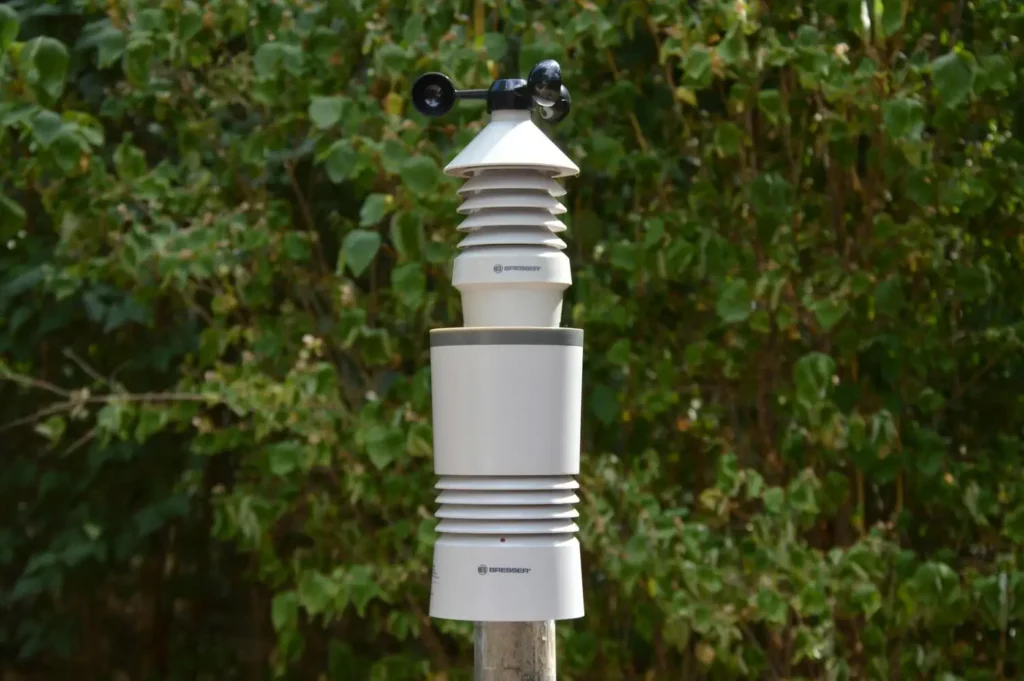
IoT technologies are playing a growing role in Kenyan agriculture by enabling real-time monitoring of field conditions. This shift is particularly important for smallholder farmers, who are increasingly benefiting from tools that were once limited to large-scale commercial operations. According to Farmonaut, smart farming technologies are already helping Kenyan smallholders boost productivity, improve soil and crop management, and make more data-driven decisions at farm level. Sensors placed in the soil or environment can measure variables such as soil moisture, temperature, humidity, and nutrient levels. This data provides a continuous picture of crop and soil health, allowing farmers to respond quickly to changing conditions.
At Nuasense, we build smart agricultural sensors designed for local farming conditions. Our sensors measure multiple environmental and soil variables and use this data to generate practical recommendations, for example, when to irrigate, how to optimize water use, or when crops may be under stress. By turning raw sensor data into clear guidance, we help farmers move from reactive to proactive farm management. More about the role of IoT in Kenyan agriculture can be found in my latest blog article “IoT applications in Kenyan Agriculture”.

Adoption of smart farming by smallholder farmers
For a long time, many of the digital technologies described above were designed primarily for large-scale commercial farms with significant capital and technical capacity. Today, this is changing rapidly. Falling hardware costs, mobile connectivity, and locally adapted business models mean that more and more smallholder farmers in Kenya can now adopt smart farming solutions that were previously out of reach. This section explores how accessibility, skills, and real-world impact are shaping adoption among small-scale producers.
Accessibility and affordability of smart farming tools
Smallholder farmers make up the majority of Kenya’s agricultural producers, yet they often operate with limited margins and high exposure to risk. For smart farming tools to be viable in this context, they must be affordable, modular, and deliver clear value within a short time frame. High upfront costs, complex installation, or unclear benefits can quickly discourage adoption.
Recent innovations have begun to address these constraints. Low-cost sensors, shared infrastructure models, and pay-as-you-go or subscription-based pricing reduce the financial barrier to entry. In addition, tools are increasingly being designed to work on small plots and mixed-cropping systems, reflecting the realities of Kenyan smallholder agriculture rather than large monoculture farms.
Farmer training, digital literacy, and capacity building
Access to technology alone does not guarantee impact. Farmers must be able to understand the information provided and trust it enough to change their practices. This makes training and capacity building a critical component of smart farming adoption.
In Kenya, effective approaches combine digital tools with human support. Extension officers, lead farmers, and agronomists play an important role in explaining recommendations, troubleshooting issues, and contextualizing data. Digital literacy programs, on-farm demonstrations, and farmer groups help bridge the gap between technology and day-to-day decision-making, ensuring that smart farming tools are used consistently and correctly.
Impact of smart farming on productivity and livelihoods
When smart farming technologies are well adapted and properly used, their impact can be substantial. More precise input use reduces unnecessary spending on fertilizer, water, and pesticides, while timely insights help farmers respond quickly to stress, pests, or changing weather conditions. More on factors impact soil health can be found in my latest article “declining soil health in Kenya“.

Over time, these improvements translate into higher and more stable yields, lower production risks, and improved household incomes. Beyond productivity gains, smart farming also strengthens farmers’ decision-making capacity, increases transparency in farm management, and supports more sustainable use of land and natural resources.
Role of government, startups, and agritech innovation
The growth of smart farming in Kenya is not driven by technology alone. An enabling ecosystem, made up of supportive government policies, innovative startups, and collaborative partnerships, plays a critical role in turning digital solutions into real-world impact. While large-scale farms were the earliest adopters of agricultural technologies, coordinated efforts across the public and private sectors are now helping extend these innovations to smallholder farmers across the country.
National policies and public-sector support for digital agriculture
The Kenyan government has increasingly recognized digital agriculture as a key pillar of agricultural modernization and food security. National strategies emphasize the use of ICT to improve extension services, enhance climate resilience, and increase agricultural productivity. Investments in broadband infrastructure, digital public services, and agricultural data systems create the foundation on which private innovation can thrive.
Public-sector involvement is particularly important in areas where market incentives alone are insufficient. This includes setting data standards, supporting last-mile connectivity in rural areas, and integrating digital tools into national programs such as subsidy schemes, farmer registries, and climate-smart agriculture initiatives. When aligned effectively, these efforts reduce fragmentation and help ensure that digital solutions reach farmers at scale.
Growth of agritech startups and innovation hubs
Kenya’s vibrant startup ecosystem has become a major driver of agritech innovation. Local startups are developing solutions across the agricultural value chain, including farm management, soil and crop monitoring, access to finance, logistics, and market linkages. Unlike imported technologies designed for large industrial farms, many Kenyan agritech startups build products specifically for smallholder contexts.
Innovation hubs, incubators, and accelerators support this ecosystem by providing startups with technical mentorship, business development support, and access to pilot opportunities with farmers and agribusinesses. These environments allow rapid testing and iteration, helping startups refine their solutions based on real farmer feedback and local conditions.
Public-private partnerships and donor-funded initiatives
Public-private partnerships and donor-funded programs have played a significant role in accelerating the adoption of smart farming in Kenya. By sharing risk and providing early-stage funding, these initiatives enable new technologies to be tested and validated in real-world settings before full commercial rollout.
Collaboration between governments, startups, NGOs, and development partners also helps align technology deployment with broader development goals such as food security, climate adaptation, and rural livelihoods. When successful, these partnerships move beyond short-term pilots and lay the groundwork for sustainable, large-scale adoption of smart farming solutions.
Future opportunities and challenges for smart farming in Kenya
Looking ahead, smart farming has the potential to fundamentally reshape Kenyan agriculture, particularly for smallholder farmers who are most exposed to climate risk and market volatility. While many digital tools were initially developed for large-scale, capital-intensive farms, the next phase of growth lies in adapting and scaling these solutions for diverse rural contexts. This section explores where the biggest opportunities lie, as well as the structural and systemic challenges that must be addressed to unlock long-term impact.
Scaling smart farming solutions across rural areas
One of the most significant opportunities for smart farming in Kenya is moving beyond pilot projects and early adopters toward large-scale, sustained use. Many technologies have already demonstrated clear value in controlled trials or with lead farmers, but scaling them across thousands of smallholder farms presents a different set of challenges.
Successful scaling requires more than just technology. Distribution networks must reach remote rural areas, customer support needs to be locally available, and solutions must be robust enough to function in environments with limited infrastructure. Business models also matter: flexible pricing, bundling with inputs or services, and partnerships with cooperatives, agribusinesses, and farmer organizations can significantly reduce adoption friction and improve reach.
Infrastructure, connectivity, and data privacy challenges
Despite rapid progress in mobile connectivity, infrastructure remains a key constraint for smart farming in many parts of Kenya. Unreliable electricity, limited broadband coverage, and high data costs can restrict the use of sensor-based systems, cloud platforms, and real-time analytics, particularly in more remote regions.
At the same time, the growing use of digital tools raises important questions around data ownership, privacy, and trust. Farmers need clarity on how their data is collected, stored, and used, and they must see tangible benefits in return. Addressing these issues will require clear regulatory frameworks, transparent data practices, and close collaboration between policymakers, technology providers, and farmer representatives.
Opportunities for climate resilience and sustainable agriculture
Climate change is one of the defining challenges for Kenyan agriculture, and smart farming offers powerful tools to help farmers adapt. Data-driven insights enable more efficient water use, better timing of planting and harvesting, and earlier detection of stress caused by drought, pests, or disease.
In the long term, these capabilities support more sustainable agricultural systems that balance productivity with environmental stewardship. As local and international markets place increasing emphasis on sustainability and traceability, smart farming technologies can also help Kenyan farmers meet emerging standards while protecting their natural resource base. By improving water efficiency, reducing input waste, and enabling early warning systems, digital technologies can help farmers adapt to changing climate conditions.
As sustainability becomes a priority for both local and global markets, smart farming will play an increasingly important role in shaping the future of Kenyan agriculture.
Are you looking to make your farm smarter?
The future opportunities described above, scaling smart farming solutions, improving infrastructure resilience, strengthening data-driven decision-making, and building climate-smart and sustainable farming systems, are not abstract ideas. They are practical, achievable steps that farmers can start taking today with the right tools and support.
At Nuasense, we actively work on these future opportunities. Our solutions focus on real-time field data through smart sensors, actionable recommendations for irrigation and input optimization, scalable deployment models suitable for smallholder farmers, and decision-support tools that help farms become more resilient to climate variability. By combining locally built technology with a deep understanding of Kenyan farming conditions, we help farmers transition from traditional practices to smarter, data-driven agriculture.
If you are interested in making your farm more efficient, resilient, and future-ready, we would be glad to hear from you. Get in touch with us to explore how smart farming can work for your farm.